
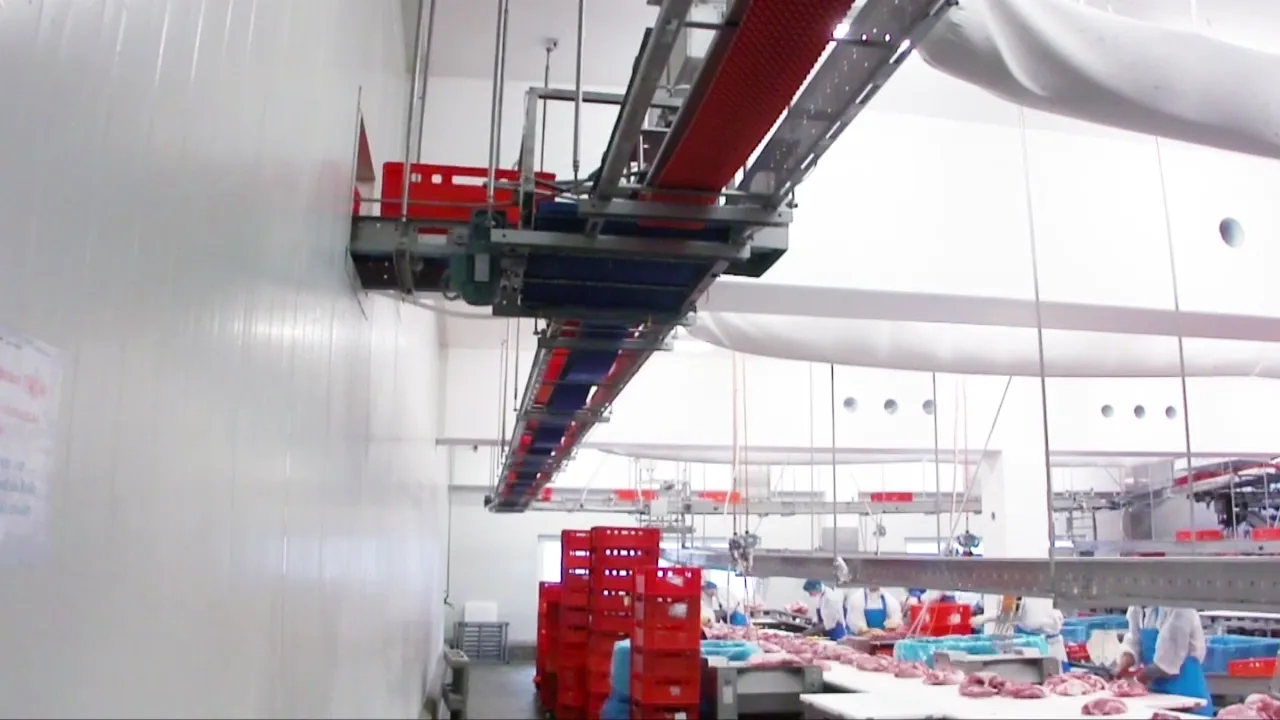
Facility Hygiene Engineering
Condensation Control in Meat Plants
Dripping ceilings and wet surfaces are not a cleaning problem — they are an air-balance problem, and they fail customer audits. INTERCOOL diagnoses the root cause of condensation in meat and food processing facilities and engineers it out, so production stays dry, hygienic and audit-ready.
What causes condensation in a meat plant?
Condensation control is the engineering discipline of keeping warm, moisture-laden air from reaching cold surfaces where it can condense. In a meat or food processing facility the underlying driver is rarely the cleaning regime — it is the air balance between rooms held at different temperatures and humidities.
Where a differential air pressure (ΔP) exists between adjoining rooms, air migrates from the warmer, more humid space toward the chilled one. As that moisture-laden air meets cold surfaces, it condenses — appearing as dripping ceilings, wet walls and standing moisture in exactly the areas where hygiene matters most. Because the cause is physical, no amount of wiping or mopping resolves it for long; the air movement has to be corrected at source.
Definition
- Differential air pressure (ΔP)
Differential air pressure (ΔP) is the pressure difference between two adjoining rooms held at different conditions. A ΔP drives moisture-laden air from the warmer, more humid room into the colder one, where it meets cold surfaces and condenses — the root cause of most condensation and ingress problems in processing facilities.
Why condensation is a hygiene and audit risk
Condensation is treated as a serious defect in food-safety audits because of what it carries and where it lands. Water forming on overhead structures and walls can drip onto product, equipment and contact surfaces, creating a route for potential product contamination.
The same persistent moisture promotes fungal and bacterial growth on surfaces and in hard-to-reach voids, and visible condensation is one of the issues most likely to count against a plant in customer audits. Left unresolved it also threatens the structural integrity of the building fabric over time. Addressing the root cause protects the product, the audit result and the facility itself.
How condensation problems are diagnosed and resolved
INTERCOOL works from measured evidence to a corrected, dry environment in four steps.
Facility survey
A site survey identifies where condensation occurs and traces the conditions that cause it — room temperatures, humidity sources and the air movement between adjoining spaces.
Air-balance measurements
Air-balance measurements quantify the differential air pressures driving moisture-laden air from warm into chilled areas, turning a visible symptom into measured data.
Report and action list
A report sets out the causes, an action list and design proposals — so remediation targets the physics, not just the surfaces.
Implementation support
INTERCOOL supports implementation of the agreed measures, through to a dry and hygienic production environment with the building's structural integrity protected.
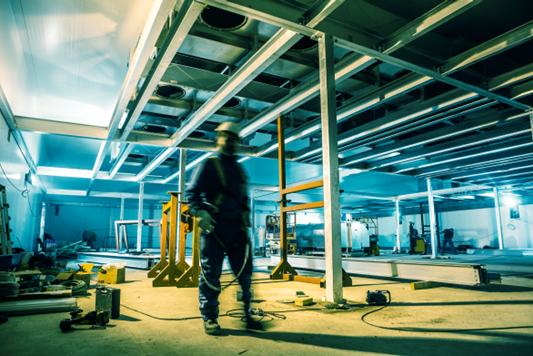
Four ways condensation is engineered out
Air sectioning
Separating rooms held at different conditions so warm, humid air cannot migrate into chilled areas in the first place.
Dehumidification
Removing moisture from the air using dehumidification techniques where the humidity load itself is the problem.
Air-pressure adjustment
Correcting the differential air pressures between adjoining rooms using the facility's existing air-handling units (AHUs).
Homogeneous air distribution
Designing even, homogeneous air-distribution systems so conditions stay stable across the whole space, with no cold or stagnant pockets.
Root-cause engineering, not symptom cleaning
4
step survey-to-implementation service
Facility survey, air-balance measurements, report with action list, implementation support
68+
years of engineering experience
A Danish food-technology engineering company founded in 1958
200+
completed projects worldwide
Process design for facilities handling large volumes of hot and humid air
Condensation control — frequently asked questions
Why does condensation keep coming back after cleaning?
Because cleaning treats the symptom, not the cause. Condensation is driven by differential air pressure pushing moisture-laden air from warm into chilled areas, where it meets cold surfaces and condenses. Until the air balance is corrected, the moisture returns regardless of how thoroughly surfaces are wiped.
Why is condensation a problem in food-safety audits?
Condensation can drip onto product and contact surfaces, creating a contamination route, and the persistent moisture encourages fungal and bacterial growth. Visible condensation is one of the issues most likely to count against a plant in customer audits, which is why it is treated as a hygiene defect rather than a cosmetic one.
How is the cause of condensation identified?
Through a facility survey followed by air-balance measurements. The survey locates where condensation forms and the conditions behind it; the measurements quantify the differential air pressures moving humid air between rooms, turning a visible symptom into measured data that remediation can target.
What engineering solutions remove condensation?
Four levers cover most cases: air sectioning between rooms of different conditions; dehumidification where humidity load is high; adjusting air pressures between adjoining rooms using existing air-handling units; and designing homogeneous air distribution so conditions stay stable throughout the space.
Can existing air-handling equipment be used?
Often, yes. Air-pressure adjustments between adjoining rooms can frequently be made using the facility's existing AHUs, so resolving condensation does not necessarily require wholesale new equipment — the air balance is corrected with what is already installed where possible.