
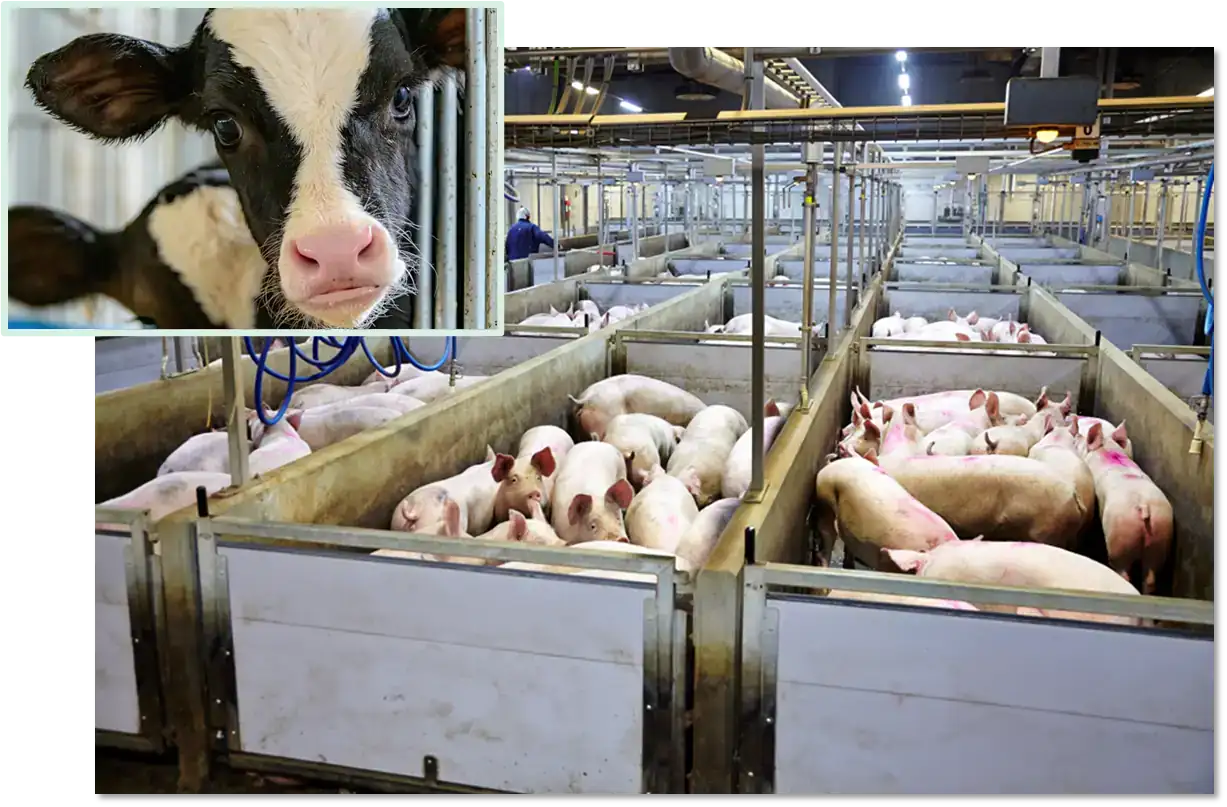
Live Animal Handling Systems (LAHS)
Animal Handling and Meat Quality
Everything that happens between the farm gate and the bleeding rail is already deciding your yield — and getting it right barely changes CAPEX. Neglecting it substantially reduces product value. INTERCOOL designs live animal handling systems as engineering, specifying lairage, driveway, stunning and bleeding to protect the meat quality your plant is built to produce.
What is a live animal handling system?
A Live Animal Handling System (LAHS) is the engineered chain that moves animals from the farm into the slaughter process under controlled conditions. It consists of six main elements: truck design, operator performance, unloading, lairage, driveway and stunning, and the sticking and bleeding system. Together they cover every stage from loading on the truck at the farm until certain death of the animals has been ensured.
Each element is a design problem with its own criteria, not a procedure to be written down after the building is finished. The lairage serves two purposes at once: it acts as a production buffer ensuring constant flow into the slaughter line, and it gives animals comfortable resting conditions that reduce the negative effects of transport-related stress on meat quality.
The driveway and stunning system — often supplied as a complete package by the stunning-system manufacturer — must deliver safe and reliable stunning while avoiding needless discomfort, pre-slaughter stress or distraction of the animals, any of which compromises welfare, disturbs production flow and degrades meat quality. The bleeding system must comply with the maximum allowed stun-to-stick time and give shackling and sticking operators ergonomic, efficient workstations, with bleeding and observation time sufficient to ensure certain death.
Definition
- Live Animal Handling System (LAHS)
A Live Animal Handling System (LAHS) is the designed sequence of truck design, operator performance, unloading, lairage, driveway and stunning, and sticking and bleeding, covering all areas from loading on the truck at the farm until certain death of the animal has been ensured. It is the foundation for animal welfare, traceability and the consistent production of premium-quality meat.
Why handling decides meat quality before chilling starts
Pre-slaughter handling and carcass chilling go hand in hand. Well designed together, the two processes slow the pH decline and reduce denaturation of proteins, which reduces drip loss and improves meat quality.
The failure modes sit at either end of that decline. A fast pH drop after slaughter produces PSE meat — pale, soft and exudative. A very small pH drop produces DFD meat — dark, firm and dry. Genetics influence the curve, but so does everything the animal experiences in the hours before stunning, which is precisely what the handling system controls.
Live animal handling systems are designed compliant with EC 1099/2009 on the protection of animals at the time of killing, and can be adapted to USDA/FDA requirements for plants serving other markets. Welfare obligations and yield protection point the same way here — the design choices that satisfy one generally satisfy the other.
The commercial argument is unusually clean. Whether or not these details are executed with care, capital expenditure remains largely unchanged — but neglecting them leads to a substantial reduction in product value and negatively affects the efficiency of downstream slaughtering operations. A well designed system shows up as less drip loss, fewer bruisers, fewer trimmings from muscular haemorrhages and spot bleedings, fewer broken limbs, less dead-on-arrival, less PSE, darker meat, lower cleaning costs — and fewer operators, because good layout lets the animals move themselves rather than being driven.
The handling chain, stage by stage
Meat quality is only as strong as the weakest link in this chain. Each stage is specified against its own criteria.
Truck design and loading at the farm
The chain begins before the animals arrive. Vehicle design and loading conditions set the stress load that everything downstream has to absorb.
Unloading
Specified for level-free unloading from livestock vehicles, weather-independent unloading, the unloading time and the number of unloading ramps, plus facilities for drivers and documentation exchange.
Lairage
Sized against production capacity, required area per animal, required resting time, overnight stay and variation in supply frequency. Placed for access to the stunning system, operator and veterinarian access, segregated entrance and exit for livestock vehicles, and access to the weighbridge and vehicle sanitation.
Driveway and stunning
The choice between electric and CO2 stunning is weighed on animal welfare, reliability, meat quality, working environment and labour requirement, installation and building requirements, and CAPEX and OPEX. Configuration follows capacity, herd or group size, cycle time and stress incurrence, future expansion and space requirements.
Sticking and bleeding
Dimensioned by the allowed stun-to-stick time for the chosen stunning principle, production capacity, required number of operators, and the stunning procedure and its fluctuation. Bleeding and observation time must ensure certain death, and may include a monitoring system.
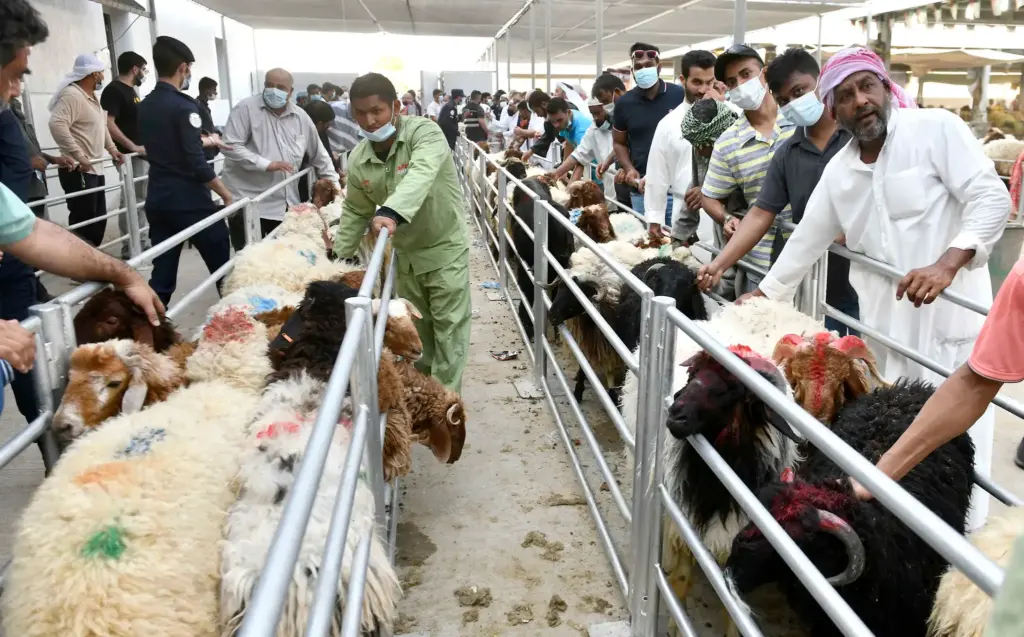
Lairage — design criteria
| Sizing | Production capacity, required area per animal, required resting time, overnight stay, variation in supply frequency |
|---|---|
| Placement | Access to the stunning system; operator and veterinarian access; segregated entrance and exit for livestock vehicles; access to weighbridge and to vehicle sanitation |
| Connections | Level-free connection to the stunning system; level-free, weather-independent unloading; unloading time and number of ramps; provision for future expansion |
| Animal grouping | Weight ranges for pigs, sows and boars; herd or group size aligned with the stunning system; handling of unmarked animals |
| Building and fit-out | Floor surface and slope, pens, gates and locks; type and placement of drains; drinking troughs and nipples; feed supply and bedding |
| Veterinary and welfare | Ante-mortem inspection facilities; veterinarian inspection and admittance; handling of sick or unfit animals |
| Environment | Hygiene and cleaning; cooling, heating and ventilation; ambient climate; odour and noise emissions |
| Safety | Fire safety and segregation |
Stunning and bleeding — what gets specified
Stunning principle
Electric or CO2, decided on animal welfare, reliability, meat quality, working environment and labour requirement, installation and building requirements, and CAPEX and OPEX.
Driveway detail
Lairage-to-driveway interface, manual or semi-automatic lairage system, driveway width, slope, drains and gate design, operator access, lighting conditions, and the height difference between stunner entrance and outlet.
Bleeding line
Conveyor design, shackling and sticking workstation design, horizontal or vertical sticking, conventional or hollow sticking knife, knife sterilisation, hygiene and apron wash, and the bleeding line floor and blood trough.
Blood and traceability
Conventional or hygienic blood collection — the latter enabling human-consumption, pet-food, feed or technical blood products — plus blood removal and anticoagulant, bleeding monitoring and alarm functionality, and traceability of unmarked batches.
Where the value is won and lost
6
elements in a live animal handling system
Truck design, operator performance, unloading, lairage, driveway and stunning, sticking and bleeding
68+
years of engineering experience
A Danish food-technology engineering company founded in 1958
200+
completed projects worldwide
Design and realisation of handling and slaughter processes to industry standards
Animal handling and meat quality — frequently asked questions
How does animal handling affect meat quality?
Handling governs how fast pH falls in the muscle after slaughter. A fast pH drop produces PSE meat — pale, soft and exudative. A very small pH drop produces DFD meat — dark, firm and dry. Well designed handling and chilling together slow the pH decline and reduce protein denaturation, which reduces drip loss. In practical terms, good handling shows up as less drip loss, fewer bruisers, fewer trimmings from haemorrhages and spot bleedings, fewer broken limbs, less dead-on-arrival and less PSE.
What does a live animal handling system consist of?
Six main elements: truck design, operator performance, unloading, lairage, driveway and stunning, and the sticking and bleeding system. Together they cover all areas from loading on the truck at the farm until certain death of the animals has been ensured.
How is a lairage sized?
Against production capacity, the required area per animal, the required resting time, whether animals stay overnight, and the variation in supply frequency. Placement is then decided by access to the stunning system, access for operators and veterinarians, segregated entrance and exit for livestock vehicles, and access to the weighbridge and to livestock-vehicle sanitation.
Electric or CO2 stunning — how is the choice made?
It is weighed on six factors: animal welfare, reliability, meat quality, working environment and labour requirement, installation and building requirements, and CAPEX and OPEX. Once the principle is chosen, the configuration follows from capacity, herd or group size, cycle time and stress incurrence, space requirements and provision for future expansion.
Does better animal handling cost more to build?
Largely no. Whether or not these details are executed with care and precision, capital expenditure remains largely unchanged. What changes is the outcome: neglecting the details leads to a substantial reduction in product value and negatively affects the efficiency and effectiveness of downstream slaughtering operations.
Why does stun-to-stick time matter?
It is the constraint that dimensions the whole bleeding system. The allowed stun-to-stick time depends on the stunning principle chosen, and together with production capacity, the required number of operators and the fluctuation in the stunning procedure it determines conveyor design, workstation layout and the placement of the bleeding line relative to the stunning system and unclean slaughter line.