
Rendering, by-products & effluent treatment
Poultry rendering plant design: categories, sterilisation and effluent in one scope
Poultry rendering plant design is the engineering of the unit that converts a poultry slaughterhouse's own by-products into stable meal and fat, together with the effluent plant that treats what rendering cannot take. It is bounded by Regulation (EC) No 1069/2009 on animal by-products, which fixes what each category of material may become, and by the sterilisation parameters in its implementing regulation.
What is a poultry rendering plant?
A poultry rendering plant is the process unit that takes the by-products a poultry slaughterhouse generates — trimmings, frames, offal, feathers and separately collected blood — and converts them by controlled heat into two stable, storable outputs: a dry processed animal protein, and rendered poultry fat. The design work is sizing that train, applying the sterilisation duty the law imposes, and tying it to the effluent plant.
Two instruments set the boundaries. Regulation (EC) No 1069/2009 on animal by-products classifies every stream by risk and fixes which end-routes remain open to it. Its implementing regulation sets the parameters: for pressure sterilisation, a particle size of 50 mm or less, a core temperature above 133 °C, held at least 20 minutes, at an absolute pressure of 3 bar or more. Cooker type, separation route, meal handling and odour control are engineering judgement inside those limits.
This page covers the process from the collection point onward. Site placement is treated in slaughterhouse environmental design; the slaughter line in poultry processing plant design.
_Reviewed: September 2026_
Definition
- Rendering
Rendering is the controlled heat treatment of animal by-products that drives off water, sterilises the material and separates it into a dry protein meal and a rendered fat — turning a by-product stream into storable products instead of a disposal cost.
Why does the by-product category decide the design?
Nothing can be specified until the streams are sorted. The category a stream falls into determines both the treatment it must receive and what it is permitted to become.
Category 1 is the highest-risk material: material suspected of transmissible spongiform encephalopathy, specified risk material, and certain international catering waste. Its route is disposal — incineration, or pressure sterilisation followed by incineration or landfill. It never enters the feed chain.
Category 2 covers fallen stock, manure and digestive tract content, and material carrying residues. After processing it can go to composting, biogas, organic fertilisers and soil improvers, or certain technical uses, but not to feed for farmed animals.
Category 3 was fit for human consumption at slaughter but is not intended for it, and in a poultry plant it is the bulk of the volume: trimmings, frames, offal and blood from healthy stock passed at inspection. Subject to the feed rules, it can become petfood, processed animal protein, organic fertiliser, biogas feedstock or technical products.
These are principal routes, not a closed list. The design consequence is direct: segregation happens at the collection point, in the receiving containers and conveyors, because a Category 3 stream that touches Category 1 material is Category 1 from then on.
The rendering train, stage by stage
Generic process engineering, arranged to meet the regulatory duty.
Reception and category segregation
By-products arrive in identified containers or conveyors, one route per category. Once streams mix, the whole batch takes the most restrictive route.
Size reduction
A pre-breaker or grinder brings the material to 50 mm or less, so heat reaches the core of every piece within the holding time.
Cooking and sterilisation
A batch or continuous cooker drives off water and holds the material above 133 °C for at least 20 minutes at 3 bar absolute or more.
Separation of fat from solids
The cooked mass is drained, then pressed or centrifuged. The split point between screw press and decanter sets the residual fat left in the meal.
Meal milling, cooling and storage
Greaves are milled to meal, cooled, screened for foreign bodies and conveyed to silo or bagging. Warm meal in a silo is a self-heating risk.
Fat polishing and storage
Rendered fat is polished to remove fines and moisture, then held in heated tanks at a temperature that keeps it pumpable without degrading it.
Odour and condensate treatment
Cooker vapours and process air go to condensers, biofilter, scrubber or thermal oxidiser, with condensate routed to the effluent plant, which is sized for that duty.
Pressure sterilisation parameters (processing method 1)
| Governing rule | Annex IV of the implementing regulation to the European animal by-products regulation, processing method 1 |
|---|---|
| Maximum particle size before processing | 50 mm |
| Minimum core temperature | above 133 °C |
| Minimum holding time at core temperature | 20 minutes |
| Minimum absolute pressure | 3 bar |
| Applies to | Material required to be pressure sterilised before its end-route |
| Design implication | Size reduction, cooker duty and residence time follow from this |
How is the effluent from a poultry plant treated?
The effluent plant is not a separate project from rendering: the two share load, utilities and sludge routes. The European reference document on best available techniques for slaughterhouses and animal by-products sets out the approach, and its first move is not a treatment step at all.
Keep the load out of the drain. Blood dominates the organic load of slaughterhouse effluent, so it is collected at source for separate processing rather than washed away, and solids are dry-collected before wash-down. Load kept out of the drain is treatment capacity that never has to be bought.
From there the train is conventional: screening; fat and grease removal by fat trap and dissolved air flotation with coagulant and flocculant dosing; a balancing tank to even out the peaks a slaughter day produces; biological treatment, anaerobic or aerobic or both; nutrient removal; and final clarification. Sludge is thickened, dewatered and routed to biogas or composting.
INTERCOOL's scope in a rendering and effluent project
By-product and waste handling
Collection, segregation and internal transport of by-products — a named scope item in INTERCOOL master plans.
Rendering facility
The rendering unit specified as part of the plant: reception, sterilisation, separation, meal and fat handling.
Effluent treatment plant
The ETP as a named master-plan deliverable, sized against the load the process produces.
Delivered on poultry
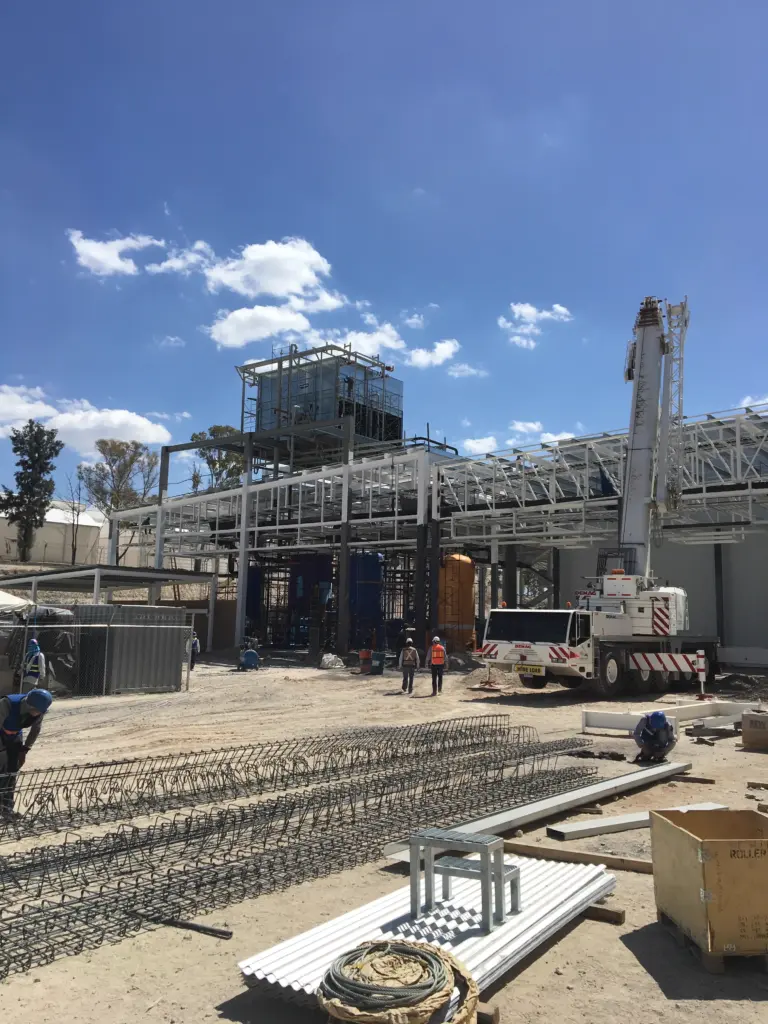
A refurbishment programme covering 7 poultry plants in Algeria included rendering and waste water treatment in each plant's scope.
Delivered on red meat
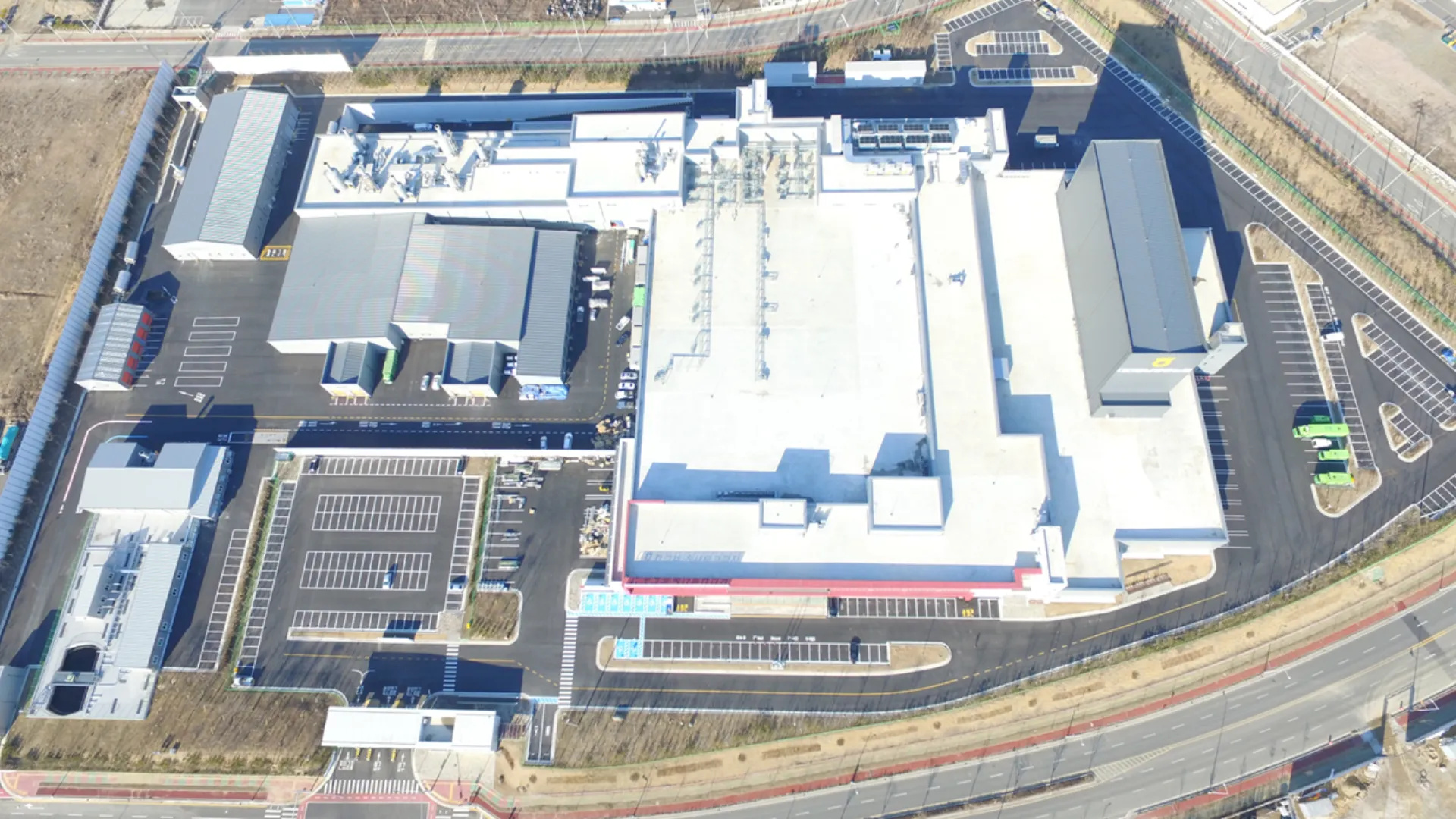
A greenfield pig-and-cattle slaughterhouse in South Korea included a wastewater treatment plant and a rendering plant.
Frequently asked questions
What is a poultry rendering plant?
The process unit that converts a poultry slaughterhouse's own by-products — trimmings, frames, offal, feathers and blood — into a dry processed animal protein and rendered poultry fat by controlled heat treatment.
What temperature and time does pressure sterilisation require?
Under processing method 1 of the implementing regulation to the European animal by-products regulation, material is reduced to a particle size of 50 mm or less and held above 133 °C for at least 20 minutes, at an absolute pressure of 3 bar or more.
What is Category 3 material and what can it become?
Category 3 was fit for human consumption at slaughter but is not intended for it — in a poultry plant, the bulk of the by-product volume. Subject to the feed rules, it can become petfood, processed animal protein, organic fertiliser, biogas feedstock or technical products.
Should the rendering plant and the effluent plant be designed together?
Yes. Rendering produces condensate and process water the effluent plant must treat, and the effluent plant produces sludge that may route back through by-product handling. Sizing either without the other leaves an ETP that cannot carry its real load.