
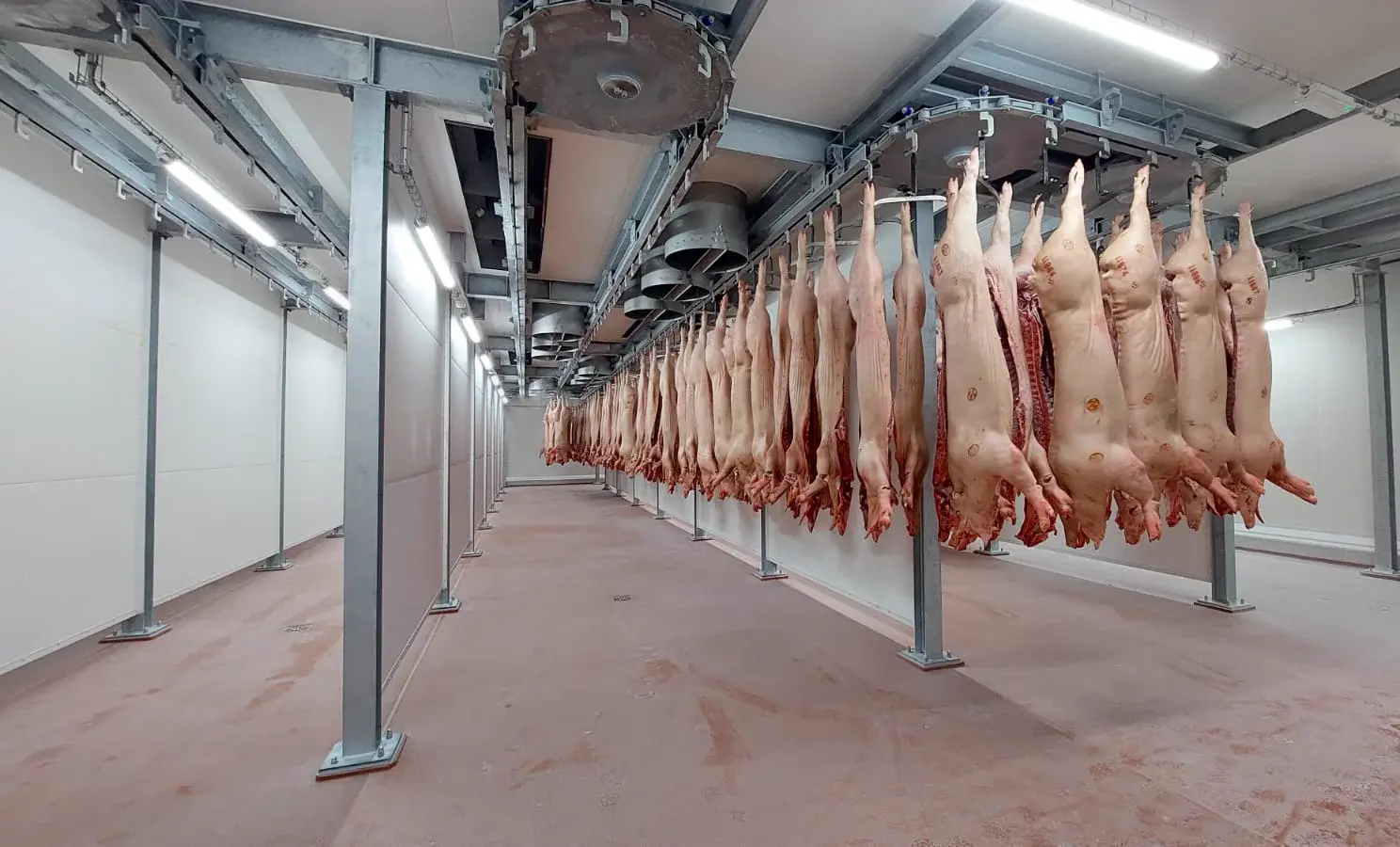
Chilling installation design
Quick Chill Tunnel Specification: How a Carcass Chilling Installation Is Designed, Tendered and Commissioned
A quick chill tunnel specification is the document that decides whether a chill hall reaches its yield, energy and meat-quality targets — or whether the plant discovers the gap after the refrigeration contractor has left site. It sets the performance criteria the installation is tendered against, the interfaces four separate trades have to build to, and the tests the finished process must pass before it is accepted.
What is a quick chill tunnel specification?
A quick chill tunnel specification describes the chilling process together with the performance criteria the finished installation must meet — written around how the carcass behaves on the rail, not how the machinery is rated. It is not an equipment list: it defines what the installation must achieve and how the packages fit together, so qualified suppliers can be asked for comparable bids and the completed process can be measured against something written down before anyone ordered steel.
Definition
- Quick chill tunnel specification
A quick chill tunnel specification documents the quick chill tunnel and the equalizing equipment as one process, with the performance criteria it must meet — air temperature profiles, process duration, airflow dynamics and carcass spacing — and the cooling, conveyor, building and steel scope required to deliver them.
Why does the specification decide how the installation performs?
Rising production volumes and heavier carcass weights are making traditional chilling systems insufficient against current meat-quality and chilling-performance expectations.
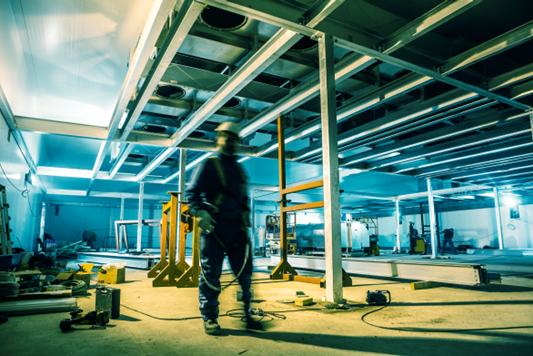
The second reason is buildability. A quick chill tunnel is one insulated structure into which steel, refrigeration, conveyor and building works are all installed, so the design demands strict interface and coordination between four contractors whose work physically overlaps. Unspecified interfaces get resolved on site by whoever arrives first, and evaporator placement, conveyor pitch and column positions stop serving the chilling process.
The insulated enclosure around the quick chiller must also hold its integrity through the frequent defrosting and refreezing that routine cleaning brings, so its construction guidelines and building interfaces belong in the specification rather than on site.
What a chilling-process specification covers
| Process scope | The quick-chilling zone and the adjacent equalizing rooms, specified as one continuous process from start to finish |
|---|---|
| Performance criteria | Air temperature profiles, process duration, airflow dynamics and carcass spacing |
| Cooling equipment | Cooling capacity, evaporator design and dimensioning, evaporator placement and the defrosting sequence |
| Conveyors | The internal logistics solution, together with conveyor length, pitch and layout |
| Building details | Floor, column, wall and roof construction, plus drains, pressure reliefs and air locks |
| Secondary steel | Columns and beams positioned according to the evaporators and conveyors, so the steel follows the process rather than the reverse |
| Insulated structure | Construction guidelines for the enclosure housing the quick chiller, written to hold integrity through repeated defrosting and refreezing |
| Building interfaces | Integration with adjoining building components, pipe penetrations, vapour-barrier integrity, insulated panel finishes and steel column supports on insulated flooring |
| Design basis | Slaughter capacity together with hot carcass weight, lean-meat percentage and back-fat thickness |
| Verification | Commissioning and performance testing at initial start-up and again at full operational capacity |
How is the design basis calculated?
The design basis starts with two inputs: the plant's slaughter capacity and the characteristics of the carcass it will actually chill — hot carcass weight, lean-meat percentage and back-fat thickness. A carcass is not a uniform thermal mass.
From that basis, proprietary simulation software built on DMRI's research into the thermal behaviour of meat, fat, rind and bone predicts the resulting chill loss. That simulation is the backbone of the design work: it turns a required capacity into evaporator dimensioning, air velocities and a process duration that can be written into a tender.
The process has two phases. Quick chilling uses high air velocity at low temperature, dropping the surface temperature until a crust forms while the core falls more slowly with carcass size; equalization then uses low air circulation close to the desired cutting temperature, so the carcass reaches a uniform cutting temperature throughout. The mechanics are covered in more depth on beef carcass chilling.
E-QCT enhancements over a plain quick chill tunnel
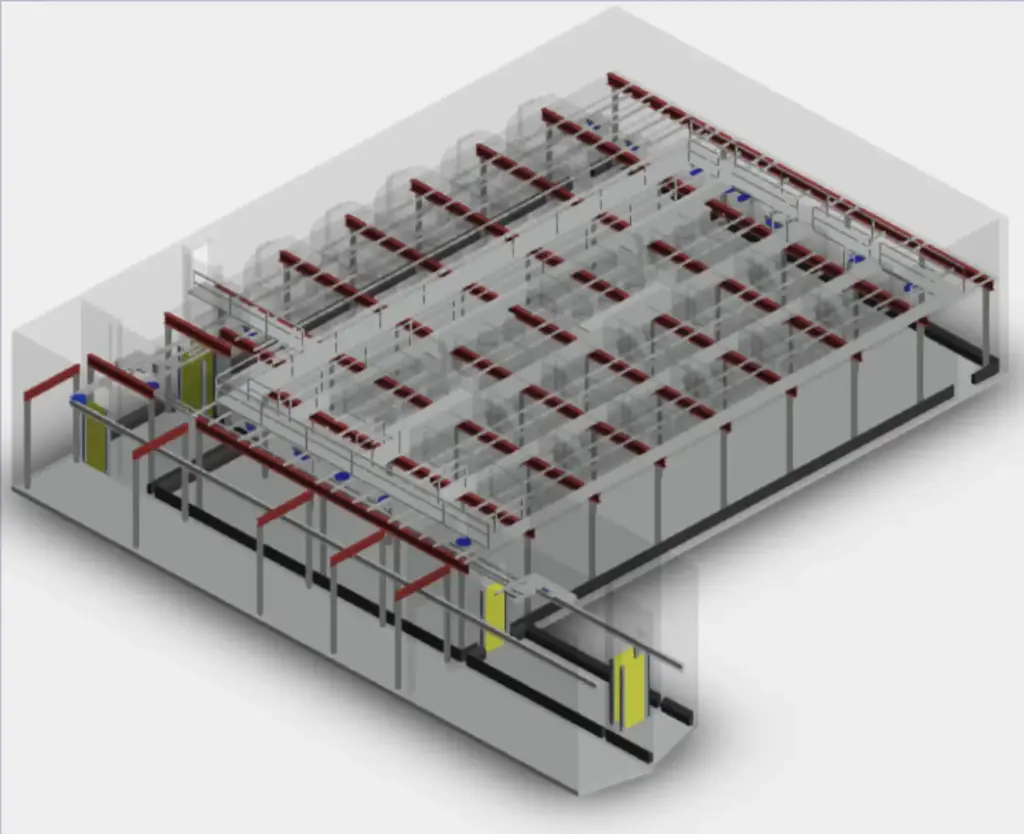
Intermediate deck
Separates the process area from the service area, which improves process efficiency, reduces heat ingression and gives better control of the air stream — both effects cutting energy consumption.
Footbridge and inspection hatches
A footbridge in the maintenance area, with inspection hatches in the evaporators, improves defrosting cycles and so reduces energy use, limits snow build-up in the tunnel and improves worker health and safety.
Optimised fin spacing
Fin spacing optimised in the evaporators means less defrosting is required and less snow builds up inside the tunnel.
From specification to proven performance
The chilling package follows the plant's overall project sequence from concept development through to commissioning, and within it moves through five practical stages.
Establish the design basis
Slaughter capacity and carcass characteristics are fixed first, then simulated to predict the chill loss the process will produce.
Write the chilling-process specification
The process and its performance criteria are documented, alongside the cooling-equipment, conveyor, building-detail and secondary-steel scope needed to achieve them.
Evaluate the refrigeration tender with the client
The tender evaluation is run jointly with the client to select the refrigeration contractor, and the selected contractor's proposed equipment and systems then get a thorough owner-side evaluation against the specification.
Supervise the installation
Supervision during installation and commissioning is delivered as site visits on demand plus remote decision-making assistance, so what is built matches what was specified.
Commission and test performance twice
Performance testing at initial start-up and again at full operational capacity verifies the specified parameters; the results drive the adjustments that further cut chill loss, improve meat quality and optimise energy consumption.
Can a chilling process be specified for a plant that keeps running?
Retrofit is a normal case rather than an exception. In a pig slaughterhouse in Spain, the chilling process was designed and specified for an existing slaughter facility, and production continued without interruption throughout the project.
A pig plant in Poland shows the same pattern with a different constraint: the new chilling process was implemented without disturbing ongoing production, with a layout designed so capacity could be expanded later rather than rebuilt. Detailed design and specification produced a trouble-free start-up that performed better than the plant's own chill-loss target.
What makes those projects work is sequencing rather than shutdown: the two-stage performance test gives an accepted point at which the new process takes over from the old one.
Retrofit proof: a pig slaughterhouse in Spain
2,630 m²
Chilling area specified
Designed into an existing slaughter facility
800 pigs per hour
Slaughter capacity
Production continued without interruption during the project
0.8-0.9%
Cooling shrinkage
Measured at 14 hours
86 kg
Hot carcass weight
The carcass characteristic the design was calculated from
Frequently asked questions
What does a quick chill tunnel specification contain?
It documents the quick chill tunnel and the equalizing equipment together with the performance criteria they must meet — air temperature profiles, process duration, airflow dynamics and carcass spacing. Around those criteria it specifies the cooling equipment (cooling capacity, evaporator design and dimensioning, evaporator placement, defrosting sequence), the conveyors (internal logistics solution, length, pitch and layout), the building details (floor, column, wall and roof construction, drains, pressure reliefs, air locks) and the secondary steel.
Does the specification cover the equalizing rooms as well as the tunnel?
Yes. The specification covers the quick-chilling zone and the adjacent equalizing rooms as one process from start to finish. Quick chilling uses high air velocity at low temperature until a crust forms on the surface; equalization then uses low air circulation at a temperature close to the desired cutting temperature so the carcass reaches a consistent, uniform cutting temperature. Specifying only the tunnel leaves the phase that determines uniformity outside the contract.
Who checks the equipment the refrigeration contractor proposes?
The tender evaluation is run together with the client to select the most suitable refrigeration contractor and equipment supplier in alignment with the defined specifications. The selected contractor's proposed equipment and systems are then given a thorough owner-side evaluation against the required quality standards, the expected performance and the operational objectives of the design — a check made on the plant owner's behalf rather than the supplier's.
When is a carcass chilling installation performance-tested?
Twice. Commissioning and performance testing is carried out at initial start-up and again at full operational capacity, to verify that the refrigeration system runs to the specified parameters. The results of those tests are used to make adjustments that further reduce chill loss, improve meat quality and optimise energy consumption.
Can a quick chill tunnel be specified for an existing plant without stopping production?
Yes — retrofit is a normal case. In a pig slaughterhouse in Spain a chilling process of 2,630 m² was designed and specified for an existing facility at a slaughter capacity of 800 pigs per hour while production continued without interruption. In a pig plant in Poland a new chilling process was implemented without disturbing ongoing production, with a layout designed to allow later capacity expansion.
What data is needed before a chilling process can be specified?
The slaughter capacity and the carcass characteristics — hot carcass weight, lean-meat percentage and back-fat thickness. Those inputs feed simulation software built on DMRI's research into the thermal behaviour of meat, fat, rind and bone, which simulates the chilling process and predicts the resulting chill loss before any equipment is specified.