
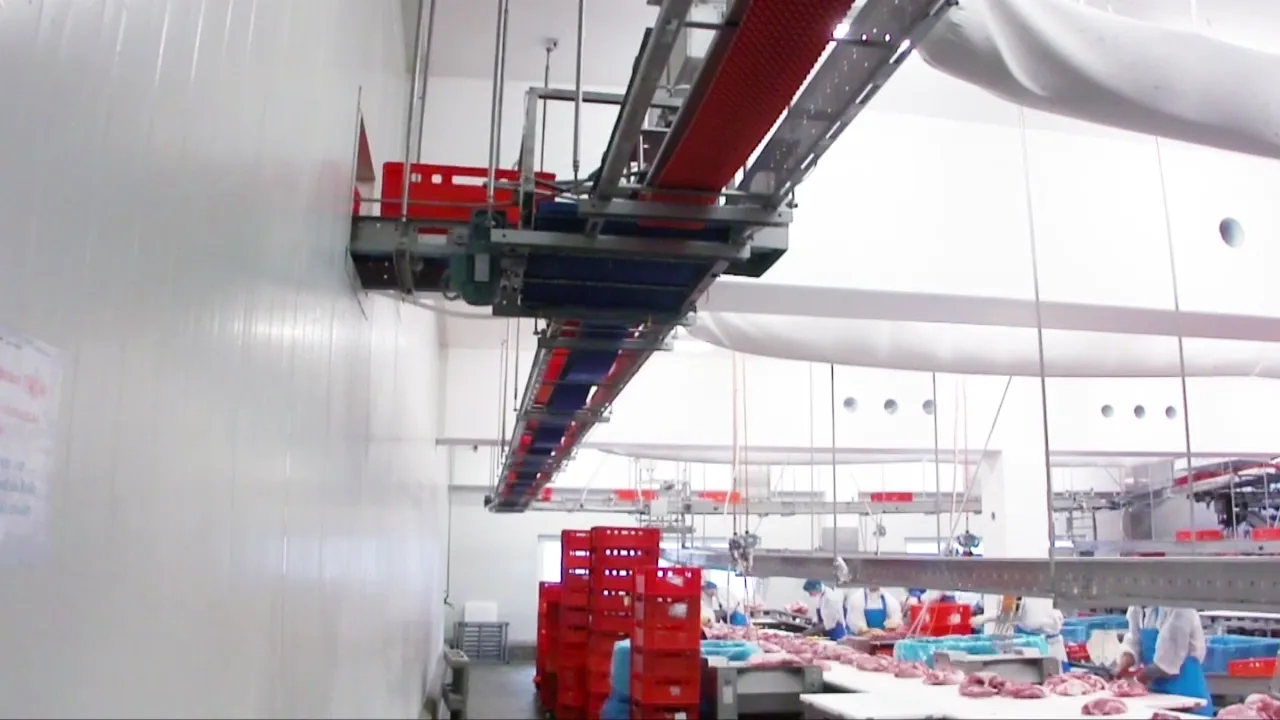
Beef Carcass Chilling & Meat Quality
Beef Ageing and Tenderness
Tenderness is decided in the first two days after slaughter, long before the meat reaches a cutting room — and a chilling regime that is too fast locks toughness into the carcass permanently. INTERCOOL designs beef carcass chilling processes around the pH and rigor window, so the meat that leaves your plant ages into the eating quality your market pays for.
What is beef ageing?
Ageing is the controlled period after rigor mortis during which naturally occurring enzymes inside the muscle gradually break down its structural proteins. As those myofibrillar proteins degrade, the meat becomes easier to chew, and tenderness improves measurably.
What ageing does not do is equally important for anyone specifying a process. Ageing significantly reduces myofibrillar toughness, but it has no effect on the toughness contributed by connective tissue. A carcass that was chilled badly through rigor cannot be rescued by leaving it on the rail for longer.
Ageing progresses fastest at the beginning and then slows, but in principle it can continue for more than 100 days. The tougher the meat is to start with, the longer the ageing period it requires — which is why animal age, growth rate and pre-slaughter stress all change how long a given carcass needs.
Definition
- Ageing
Ageing is the post-rigor period in which enzymes naturally present in muscle break down myofibrillar proteins, improving tenderness. It reduces myofibrillar toughness only — it does not reduce the toughness contributed by connective tissue, and it cannot reverse damage done during the chilling of the rigor window.
Why pH decides whether a carcass ages well
pH is a measure of acidity on a scale of 0 to 14, where pH 7.0 is neutral. In abattoir operations it is the single most useful indicator of how a carcass will eat.
In a living animal, muscle tissue sits at approximately pH 7.5. After slaughter, residual glycogen in the muscle is converted into lactic acid, and pH falls. When the available energy is exhausted the muscle stays contracted — this is rigor mortis, which in cattle occurs approximately 20 to 48 hours post-mortem. After slaughter and chilling, the recommended range for the carcass is pH 5.5 to 5.9.
A pH decline that goes wrong in either direction produces meat the market discounts:
High pH — DFD meat. Meat above pH 6.0 is classed as DFD (Dark, Firm, Dry) and follows prolonged stress before slaughter, which depletes muscle glycogen so less is available for conversion into lactic acid. The result is a firm, dry texture from increased water-holding capacity, a dull or bland taste, a metallic or chemical off-odour, darker colour, and reduced shelf life — the higher pH allows greater microbial survival.
Low pH — PSE meat. Acute stress immediately before slaughter can trigger a rapid release of glycogen and an excessive pH fall, to around pH 5.0. This produces PSE (Pale, Soft, Exudative) meat: pale colour, soft texture and increased drip loss before cooking.
Both failure modes begin before the carcass reaches the chiller, which is why pre-slaughter handling and chilling design have to be specified together.
How tenderness is built into the process
Heat removal from a beef carcass runs in two phases: from slaughter to rigor mortis, and the ageing that follows. Each stage below either protects or destroys eating quality.
Control the pH decline
A proper pH decline in the interval between slaughter and the onset of rigor is essential for optimal meat quality. Because prolonged stress causes DFD and acute stress causes PSE, this stage starts in lairage and pre-slaughter handling, not in the chiller.
Chill gently through the rigor window
Phase 1 runs from slaughter to rigor mortis, typically 24 to 48 hours. Holding the meat at 10 to 15 °C for 6 to 10 hours during the rigor period improves tenderness. In practice chilling is often too rapid, because warm carcasses are placed in cold rooms alongside carcasses that are already chilled.
Match the regime to the carcass
Fat acts as an insulator, so muscles in carcasses with appropriate fat cover cool more gradually than those in lean carcasses. Chilling conditions must be adjusted to carcass size and fatness — lean carcasses are more difficult to chill optimally and more prone to drying. Older animals need a longer stabilization period, and uniform animals are easier to chill well.
Choose the suspension method
Suspending the carcass from the pelvic bone (hip suspension) rather than the Achilles tendon improves tenderness, because certain muscles — especially in the loin and hindquarter — contract less. To have that effect it must be done within the first 48 hours post-slaughter.
Age for the market, not the calendar
Vacuum ageing stores meat in vacuum packaging; dry ageing (hanger ageing) hangs carcasses or cuts in a chilled environment. Dry ageing does not necessarily produce more tenderness than vacuum ageing, but it contributes significantly to flavour development — at the cost of higher yield losses from evaporation and trimming.
Beef chilling and ageing — process parameters
| Muscle pH in the living animal | Approximately pH 7.5 (pH 7.0 is neutral on a 0–14 scale) |
|---|---|
| Recommended carcass pH | pH 5.5 to 5.9 after slaughter and chilling |
| High-pH threshold (DFD) | Above pH 6.0 — dark, firm, dry; reduced shelf life |
| Low-pH indication (PSE) | Around pH 5.0 — pale, soft, exudative; increased drip loss |
| Rigor mortis in cattle | Approximately 20 to 48 hours post-mortem |
| Phase 1 — slaughter to rigor | 24 to 48 hours |
| Gentle chilling for tenderness | 10 to 15 °C for 6 to 10 hours during the rigor period |
| Hip suspension window | Within the first 48 hours post-slaughter |
| Maximum ageing period | Can in principle continue more than 100 days |
| Design basis inputs | Slaughter capacity, hot carcass weight, lean-meat %, back-fat thickness |
Our beef chilling design scope
Chilling process design
The chilling regime engineered around your meat-quality demands: low chill loss, low drip and packing loss, tenderness, high safety and longer shelf life.
Cooling equipment specification
Cooling capacity, evaporator design and dimensioning, evaporator placement, and the defrosting sequence.
Conveyor specification
The internal logistics solution, including conveyor length, pitch and layout through the chilling and ageing areas.
Building and secondary steel
Building detail drawings and descriptions — floor, column, wall and roof construction, drains, pressure reliefs and air locks — plus secondary steel placed to suit evaporators and conveyors.
The numbers that decide beef eating quality
5.5–5.9
target carcass pH after chilling
Above pH 6.0 gives DFD meat; around pH 5.0 gives PSE meat
20–48 h
rigor mortis window in cattle
The period in which tenderness is determined, before ageing begins
68+
years of engineering experience
A Danish food-technology engineering company founded in 1958
Beef ageing and tenderness — frequently asked questions
How long does beef need to age?
There is no single answer, because the required period depends on how tough the meat is to begin with. Ageing progresses most rapidly at the start and then slows, but it can in principle continue for more than 100 days. Older animals, animals with low growth rates raised extensively on natural pastures, and animals stressed at slaughter all require longer ageing.
Can ageing fix tough meat?
Only partly. Ageing significantly reduces myofibrillar toughness by enzymatically breaking down structural proteins in the muscle fibres. It does not affect the toughness contributed by connective tissue, and it cannot reverse the damage caused by chilling a carcass too quickly through the rigor window.
What is the difference between dry ageing and vacuum ageing?
Vacuum ageing stores meat in vacuum packaging. Dry ageing, also called hanger ageing, hangs carcasses or cuts in a chilled environment. Dry ageing does not necessarily deliver more tenderness than vacuum ageing, but it contributes significantly to flavour development. It also leads to higher yield losses, because of evaporation and the trimming that follows.
Why does chilling beef too fast make it tougher?
Because tenderness is determined while the muscle is still going into rigor mortis, approximately 20 to 48 hours post-mortem. Gentle chilling during that period — holding the meat at 10 to 15 °C for 6 to 10 hours — improves the outcome. Chilling is often too rapid in practice when warm carcasses are placed into cold rooms alongside carcasses that have already been chilled.
What causes DFD and PSE beef?
Both are pH failures caused by stress. Prolonged stress before slaughter depletes muscle glycogen, so less lactic acid forms and pH stays above 6.0 — this is DFD meat: dark, firm and dry, with reduced shelf life. Acute stress immediately before slaughter triggers a rapid, excessive pH fall to around 5.0 — this is PSE meat: pale, soft and exudative, with increased drip loss.
Does fat cover affect how a carcass should be chilled?
Yes. Fat acts as an insulator, so muscles in carcasses with an appropriate fat cover cool more gradually than those in lean carcasses. Lean carcasses are more difficult to chill optimally and are more prone to drying during chilling. Chilling conditions therefore have to be adjusted according to carcass size and fatness.