
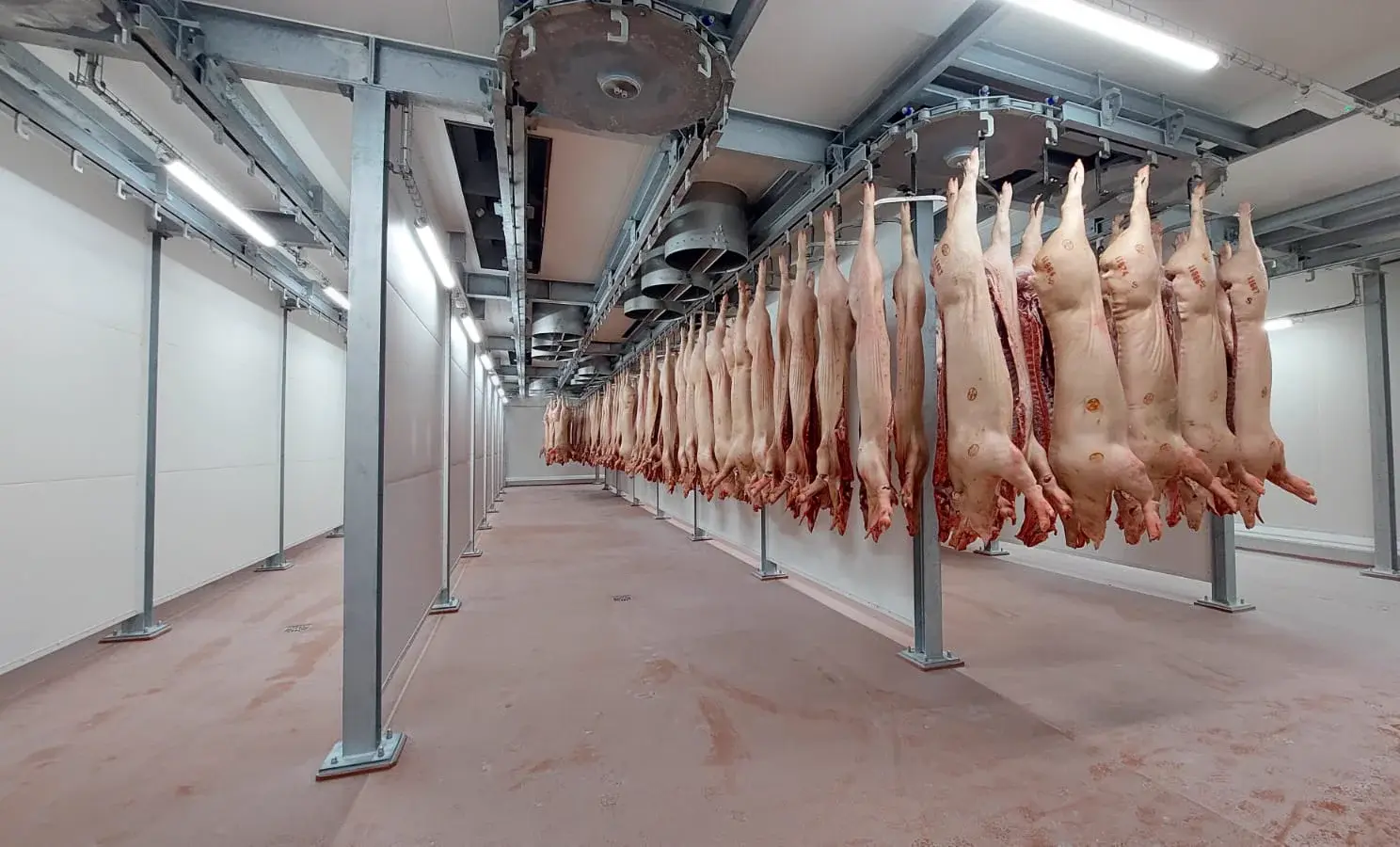
Chilling and meat quality
Which meat-quality defects does chilling rate cause?
Chilling rate influences the pork quality defects a plant ships — PSE (pale, soft, exudative) meat, DFD (dark, firm, dry) meat, excessive drip loss, weak colour, shortened shelf life and poor cuttability — alongside chill loss, microbial safety and energy consumption. Chilling is rarely the only cause, so a credible diagnosis reviews the whole chain — animal handling, slaughter practices and the chilling operation — before any remedy is chosen.
What are PSE, RFN and DFD?
The three quality classes used to describe pork are PSE — pale, soft, exudative — RFN — reddish, firm, non-exudative — and DFD — dark, firm, dry. RFN is the normal, saleable condition; PSE and DFD are the defects, and chilling rate is one of the factors deciding which of them leaves the plant. A non-optimal chill-loss level goes together with light colour, high PSE and soft meat, while the optimal level goes with dark colour and low PSE.
Chilling rate directly influences operational efficiency and plays a critical role in determining meat quality, chilling loss, shelf life and microbial safety. That is why it belongs in process design rather than in the utility settings: the same carcass can leave the chilling system as a premium cut or as a discounted one, depending on how it was cooled.
_Reviewed: November 2026_
Definition
- PSE, RFN and DFD
PSE is pale, soft, exudative meat; RFN is reddish, firm, non-exudative meat — the normal condition; DFD is dark, firm, dry meat. The three classes describe the colour, texture and water-holding behaviour of the muscle after slaughter and chilling.
Why does chilling rate matter commercially?
Chilling is where yield, quality and energy meet. The chilling operation is judged on eight dimensions at once — chill loss, drip loss, PSE, colour, shelf life, safety, cuttability and energy consumption — and a change made for one of them moves the others. Cooling harder to protect colour costs energy; cooling gently to save energy risks chill loss and PSE; a change that improves the headline weight loss can reappear later as drip in the pack.
Two of those dimensions are rarely priced properly. Cuttability decides how the carcass behaves in the cutting hall, where firm, evenly chilled meat cuts cleanly and predictably. Drip loss is paid for twice: once as lost weight in the pack, and again as the appearance a customer rejects at the shelf. Better chilling reduces drip loss directly and gives darker, more appealing colour with reduced PSE in both ham and loin cuts.
The pressure is also structural. Legacy chilling systems are becoming outdated and insufficient as production volumes rise and carcass weights grow — a system dimensioned for a lighter carcass and a lower throughput does not simply run slower, it changes the quality outcome.
What chilling rate decides, dimension by dimension
| Chill loss | Weight lost from the carcass during cooling — the headline yield figure |
|---|---|
| Drip loss | Purge in the pack after cutting; reduced directly by better chilling |
| PSE | Incidence of pale, soft, exudative meat; reduced by better chilling in ham and loin |
| Colour | Darker and more appealing with better chilling; light colour at a non-optimal chill-loss level |
| Shelf life | Determined together with chilling loss and microbial safety |
| Safety | Microbial safety of the chilled carcass |
| Cuttability | How the chilled carcass behaves in the cutting hall |
| Energy consumption | The operating cost of running the chilling system |
How does the pH decline link chilling to the defect?
The connection between the chilling operation and the finished quality runs through the shape of the pH decline after slaughter. A fast fall ends in PSE. A slow, gradual fall is the normal course and ends in saleable meat. A fall that barely happens at all ends in DFD. The chilling system acts on that curve, because it sets how quickly heat leaves the muscle while the fall is still running.
That is also why the animal arrives at the chilling hall already carrying part of the outcome: prolonged pre-slaughter stress is associated with DFD, and acute stress immediately before slaughter with PSE. Chilling cannot undo what handling and slaughter have already set in motion — which is exactly why a diagnosis that starts at the chilling tunnel is the wrong diagnosis.
How is the real cause identified?
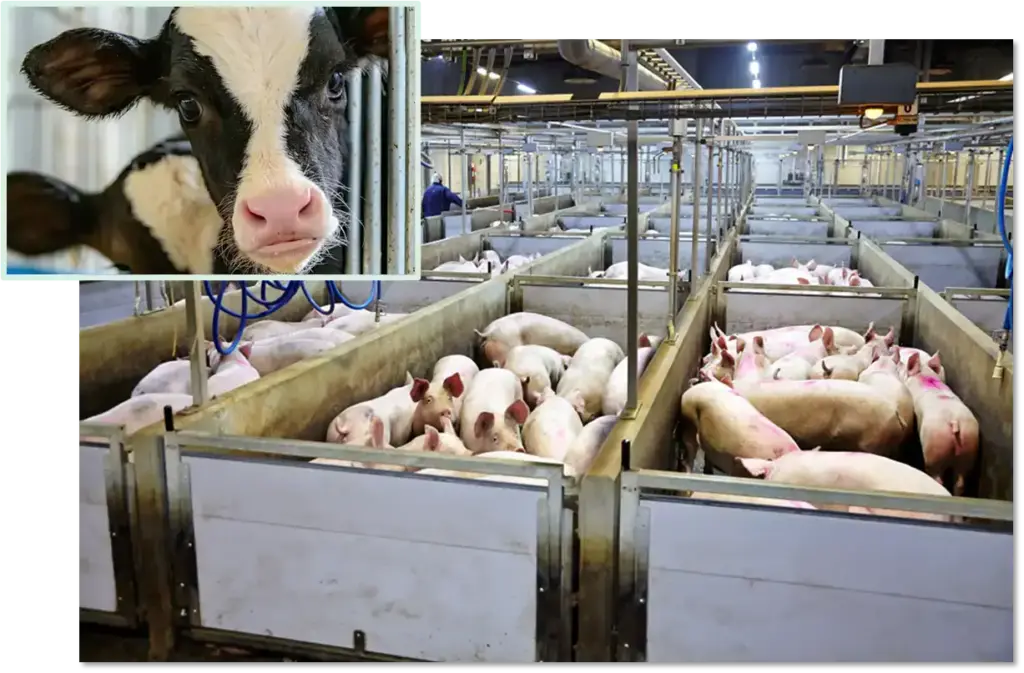
Meat quality challenges are rarely caused by chilling alone, so the work runs in three stages — and the first deliberately looks outside the chilling system.
Initial whole-chain assessment
The entire production process is reviewed: animal handling, slaughter practices and chilling operations. The stage establishes where in the chain the defect is actually created, instead of assuming the chilling system is at fault.
Determine the underlying causes
The specific quality issues are traced to their underlying causes, and the findings become a clear, practical action plan with targeted recommendations — what to change, where, and in what order.
Reporting and implementation support
A detailed technical report sets out the data analysis, photographic documentation, expert evaluations and recommendations, with hands-on support during implementation where that is required.
What a better-matched chilling process delivers
Faster heat removal
Faster heat removal from the carcass and improved process efficiency.
Quality and consistency
Enhanced meat quality and consistency across the carcasses leaving the system.
Fewer chilling-related defects
Reduced risk of chilling-related defects, including PSE and excessive drip loss.
Yield
Optimised yield and minimised weight loss.
Product value
Higher product value and extended shelf life.
A plan, not just a measurement
Targeted recommendations in a written action plan, with support while they are implemented.
Frequently asked questions
Does chilling rate cause PSE?
Chilling rate influences how much PSE a plant produces — better chilling gives reduced PSE in both ham and loin cuts, together with darker, more appealing colour — but it is not the only cause. A fast pH fall after slaughter ends in PSE, and that fall is partly set by handling and slaughter practices before the carcass reaches the chilling system.
What is the difference between PSE, RFN and DFD?
PSE is pale, soft, exudative meat. RFN — reddish, firm, non-exudative — is the normal, saleable condition. DFD is dark, firm, dry meat. The classes describe colour, texture and how well the muscle holds water after slaughter and chilling.
Can a chilling change fix a drip-loss problem?
Often partly, because better chilling reduces drip loss directly. Whether a chilling change is the right remedy depends on where the defect originates, which is why the first stage of a survey reviews the entire production process — animal handling, slaughter practices and chilling operations — before a remedy is chosen.
Why do quality defects appear as production grows?
Legacy chilling systems are becoming outdated and insufficient as production volumes rise and carcass weights grow. A chilling system dimensioned for a lighter carcass and a lower throughput rarely fails visibly; it shows up as chill loss, colour and PSE moving in the wrong direction.
What does a structured quality survey deliver?
An initial assessment of the whole chain; a determination of the underlying causes of the specific quality issues, with a clear practical action plan and targeted recommendations; and a detailed technical report containing data analysis, photographic documentation, expert evaluations and recommendations — plus hands-on support during implementation where it is required.