
Turnkey projects — operating performance
Labour productivity in meat processing plants: how it is measured and what raises it
Labour productivity in a meat processing plant is the amount of work completed in a given amount of time by the people on the line, conventionally expressed as kg or units per operator per hour. It is raised by four things: staffing levels, process flow, performance monitoring and automation, and the quality of the raw material entering the line.
What is labour productivity in a meat plant?
Labour productivity in a meat plant is the amount of work completed in a specific amount of time by the people on the line — the output side of the equation. In the meat industry it is normally written as kg or units per operator per hour, and it is applied in three practical forms: the number of animals slaughtered per operator per hour; the number of primes or kilograms processed per operator per hour; and units or kilograms processed per labour cost unit.
The formula is deliberately unvalued: what counts as a strong number depends on species, cutting specification, degree of automation and product mix, so the comparison that carries meaning is a plant against its own baseline over time. Utilisation of labour and utilisation of the infrastructure and process equipment are both factors in that result — which is why productivity is an engineering question as much as a management one.
_Reviewed: September 2026_
Definition
- Productivity and efficiency
Productivity refers to the amount of work you can complete in a specific amount of time, while efficiency focuses on achieving the same amount of work with fewer resources. So while productivity focuses on quantity, efficiency focuses on measuring quality.
Why it matters: yield is a labour-cost lever
The greatest profit potential lies in maximising the yield and value of your raw materials. A mere 1%-point yield improvement can typically translate into a 12.5% reduction in labour costs — the two lines of the cost sheet are not independent, because more saleable output comes off the same paid hour.
That is why the strategic focus belongs on producing more kilograms of higher-value products, increasing value/kg performance. A typical cost distribution in a meat plant has three parts — live animals, labour costs, and various direct and indirect costs — and no fixed split applies across plants, because the shares move with species, market and degree of automation.
Behind the yield number sit four key value drivers: preserving raw material quality (live animal handling, slaughter process optimisation, carcass chilling efficiency); eliminating process deviations (standardised cutting and boning, clear product specifications, work instructions and training); matching raw material to product (grading and sorting systems, traceability); and intelligent production control (sales-driven planning, order optimisation, dynamic yield monitoring).
How labour productivity is expressed
| General form | Kg or units / operator / hour |
|---|---|
| Slaughter line | Number of animals slaughtered per operator per hour |
| Cutting and boning | Number of primes or kg processed per operator per hour |
| Cost-based form | Units or kg processed per labour cost unit |
| Companion measure | Efficiency — the same amount of work achieved with fewer resources |
| Utilisation factors | Labour, and the infrastructure and process equipment |
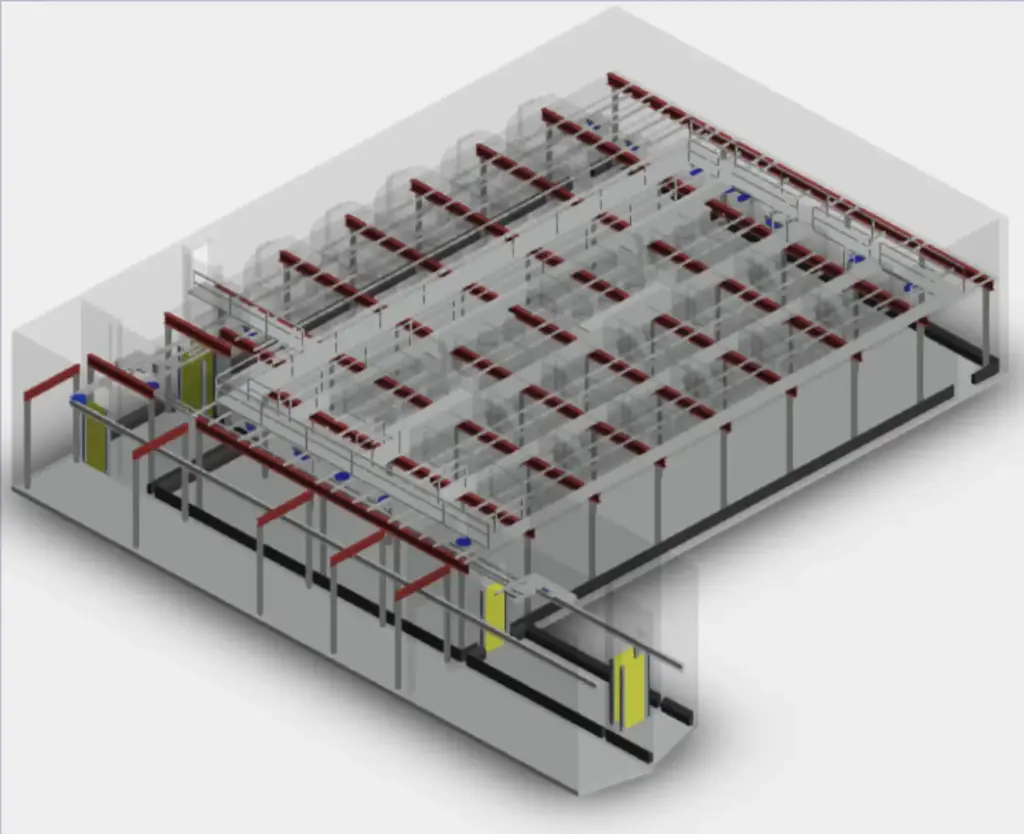
Four drivers of value creation through productivity
Optimal staffing levels
Having the right number of skilled personnel keeps operations running without delays or inefficiencies. Understaffing leads to bottlenecks; overstaffing erodes margins — and both affect yields.
Streamlined process systems
Eliminate bottlenecks and unnecessary double handling. A well-designed process flow minimises waste, accelerates throughput and enhances consistency.
Continuous monitoring, technology and automation
Real-time data and KPIs allow for proactive adjustments. Automation reduces manual effort, improves accuracy and boosts speed.
Raw materials
The condition of what reaches the line is one of the four factors, alongside staffing, flow and monitoring — the conditions are listed below.
Raw-material conditions that set the ceiling
Quality conditions
PSE, bruisers, surface colour, hardness and softness.
Right material for the product
The right carcass or prime for the right product.
Size and uniformity
Carcass size and uniformity across the batch.
Sorted left and right
Sides and cuts sorted left/right before the cutting line.
Uniform cut temperature
An even temperature at cutting, which is an outcome of the chilling process upstream.
Where the four drivers are actually decided
Staffing levels, process flow and the monitoring layer are all constrained by the building around them. Staffing levels and process flow are separate drivers, and a layout that forces double handling limits what staffing alone can reach. Master planning therefore treats labour considerations — availability, skill levels and labour costs — and production efficiency — optimised processes, equipment and facility layout — as design inputs, alongside every other factor influencing your cost per kg or unit.
The fourth driver arrives through the process itself. Live animal handling, slaughter process optimisation and carcass chilling efficiency are the named value drivers for preserving raw material quality, and a uniform cut temperature is a chilling outcome before it is a cutting-room condition. An operating productivity problem is often a process design question in disguise.
The yield-to-labour relation
1%-point
Yield improvement
The change on the yield line
12.5%
Reduction in labour costs
What a 1%-point yield improvement can typically translate into
Frequently asked questions
How is labour productivity measured in a meat plant?
As kg or units per operator per hour. It is used in three forms: the number of animals slaughtered per operator per hour, the number of primes or kilograms processed per operator per hour, and units or kilograms processed per labour cost unit.
What is the difference between productivity and efficiency?
Productivity refers to the amount of work you can complete in a specific amount of time, while efficiency focuses on achieving the same amount of work with fewer resources. Productivity focuses on quantity; efficiency focuses on measuring quality.
How does yield affect labour cost in a meat plant?
A mere 1%-point yield improvement can typically translate into a 12.5% reduction in labour costs, because more saleable output comes off the same paid hours. The strategic focus is on producing more kilograms of higher-value products — increasing value/kg performance.
Can automation alone raise labour productivity?
Automation reduces manual effort, improves accuracy and boosts speed, and real-time data and KPIs allow for proactive adjustments. But it acts alongside the other drivers rather than replacing them: understaffing leads to bottlenecks, overstaffing erodes margins, both affect yields, and raw-material condition is a fourth driver alongside them.