
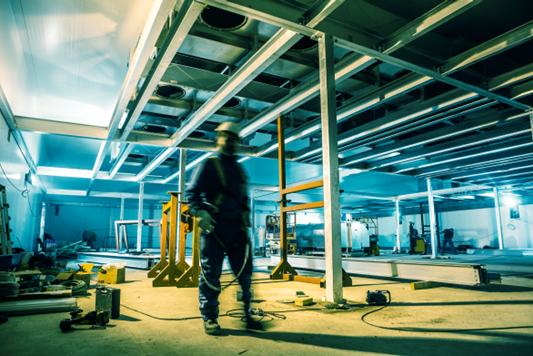
Refrigeration specification
NH₃ DX direct cooling systems: what they are and how they are specified
An NH₃ DX direct cooling system is an ammonia refrigeration system in which the refrigerant evaporates directly in the evaporator located in the area to be cooled, using a precisely controlled refrigerant charge instead of the large circulating volumes of a traditional ammonia system. Refrigeration accounts for 40–70% of a food factory's total energy consumption, so how that system is dimensioned decides much of the plant's running cost — and INTERCOOL specifies, tenders, reviews and commissions it for the plant owner.
What is an NH₃ DX direct cooling system?
An NH₃ DX (direct-expansion) cooling system is an ammonia refrigeration system in which the ammonia evaporates directly in the evaporator located in the area to be cooled, from a precisely controlled refrigerant charge rather than the large circulating volumes of a traditional ammonia system. It is specified rather than bought off the shelf: the cooling duty and load profile are established first, then the cooling capacity, the evaporator design, dimensioning and placement and the defrosting sequence are specified, put out to tender, reviewed against the selected contractor's documentation and verified at start-up.
It suits compact installations and is used across the food industry, in cold storage and in process cooling. Ammonia has zero ozone depletion potential and almost no global warming effect, so the environmental impact is minimal.
The trade-off is precision: performance is sensitive to load variations and improper settings, so the system needs correct design and close control. The specification is therefore not a formality — it decides whether the installed system performs.
_Reviewed: September 2026_
Definition
- NH₃ DX direct cooling system
An NH₃ DX (direct-expansion) system is one in which ammonia evaporates directly in the evaporator located in the area to be cooled, from a precisely controlled refrigerant charge rather than a large circulating volume.
Why does the refrigeration system decide the plant's energy bill?
Refrigeration accounts for 40–70% of a food factory's total energy consumption, and it is central to food safety, product quality and shelf life. That combination of running cost and product risk is why the refrigeration concept belongs in the engineering at the same stage as the process layout, not after it.
INTERCOOL's published position is that an NH₃ DX system could save up to 30% on the power bill. That is a stated potential of the architecture, not a measured project result.
The saving does not arrive on its own. Because DX performance is sensitive to load variation, the load profile has to be understood before the architecture is chosen.
How does DX compare with pumped circulation?
Against a traditional pumped circulation system, direct expansion is more energy-efficient, uses less refrigerant, and works for very large installations as well as compact ones. Mechanically it is simpler: no pumped circuit moves large volumes of liquid ammonia around the building.
What it does not simplify is the engineering. DX places greater demands on design and dimensioning — especially of the evaporator and the valves — and that is where the specification work concentrates.
How a DX system is specified
Within INTERCOOL's seven-stage project methodology — Concept Development Plan and Master Plan through to Start-up and Commissioning — five steps do the specification work.
Establish the cooling duty and load profile
The process defines the refrigeration, not the other way round. Product flows, chilling and storage rooms, and the Master Plan's utility requirements — energy, water, steam, refrigeration and odour control — set the duty.
Choose the architecture against that profile
Direct expansion is selected on its merits for the duty in question, because DX performance is sensitive to load variation. The choice is made before dimensioning begins.
Specify capacity, evaporators and defrost
Cooling-equipment specification covers cooling capacity, evaporator design, dimensioning and placement, and the defrosting sequence. The insulated structure housing a quick chiller must hold its integrity under the frequent defrosting and refreezing that routine cleaning brings.
Write and evaluate the tender
Concept Design provides the detailed information needed to obtain comparable bids from qualified suppliers. Selection is supplier-independent: INTERCOOL is vendor-neutral and not tied to proprietary equipment, so bids are compared on merit.
Review the documentation and verify performance
The equipment proposed by the selected refrigeration contractor is evaluated against the standards and performance expectations set in the tender. INTERCOOL supervises installation and commissioning, and performance is tested at start-up and again at full operational capacity.
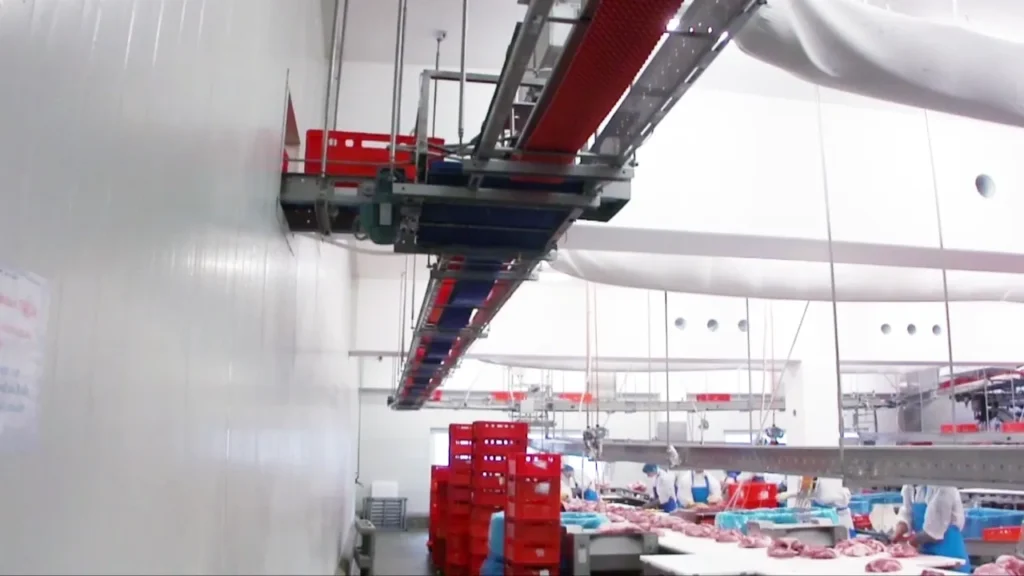
NH₃ DX at a glance
| Refrigerant | Ammonia (NH₃), a natural refrigerant |
|---|---|
| Evaporation | Direct, in the evaporator in the area to be cooled |
| Share of plant energy | 40–70% of a food factory's total energy consumption |
| Stated saving potential | Up to 30% on the power bill (INTERCOOL's published position) |
| Environmental impact | Zero ozone depletion potential; almost no global warming effect |
| Design demands | Greater than pumped circulation, especially evaporator and valve dimensioning |
| Applications | Food industry, cold storage, process cooling |
What INTERCOOL specifies — and what it does not
Utilities in the Master Plan
Master Plan deliverables include the utility system specifications. The utilities in scope are energy, water, steam, refrigeration and odour control.
Interface coordination
Refrigeration works only when it is coordinated strictly with steel, conveyor and building works.
Not in scope — deliberately
INTERCOOL does not perform the detailed refrigeration design and does not supply the refrigeration plant: that work is consulted to an external refrigeration specialist, and components come from a specialist component supplier.
The numbers that frame the decision
40–70%
of a food factory's total energy is refrigeration
INTERCOOL's published figure
Up to 30%
stated saving potential on the power bill with NH₃ DX
A published position, not a measured project result
68 years
of food-plant engineering, vendor-neutral
Founded 1958; more than 200 completed projects
NH₃ DX systems — frequently asked questions
What does NH₃ DX stand for?
NH₃ is the chemical formula for ammonia; DX stands for direct expansion. The ammonia evaporates directly in the evaporator located in the area to be cooled, rather than being circulated in large volumes from a central plant.
Is ammonia environmentally acceptable as a refrigerant?
Ammonia has zero ozone depletion potential and almost no global warming effect, so its environmental impact is minimal. A DX system holds a precisely controlled and low charge, so the quantity of ammonia in the installation is small.
What are the drawbacks of an NH₃ DX system?
It needs correct system design and precise control. Performance is sensitive to load variations and improper settings, and direct expansion places greater demands on design and dimensioning than pumped circulation — especially of the evaporator and the valves.
Where are NH₃ DX systems used?
In the food industry, in cold storage and in process cooling. The architecture suits compact installations and can also be applied to very large ones.
Does INTERCOOL design the refrigeration plant itself?
No. INTERCOOL does not perform the detailed refrigeration design and does not supply the refrigeration plant: that work is consulted to an external refrigeration specialist, and components come from a specialist component supplier. INTERCOOL specifies cooling capacity, evaporator design, dimensioning and placement and the defrosting sequence, writes and evaluates the tender, reviews the selected contractor's documentation, and verifies performance at start-up and at full operational capacity.