
Project Delivery & Tender Design
Meat Plant Procurement: Design & Build or Competitive Tendering
Long before the first drawing is issued, a meat plant project has already been shaped by one decision: whether it is delivered under a single point of responsibility, or designed first and then put out to competitive tender. INTERCOOL works in both routes and prepares the documentation each one needs, so the choice is made on economics rather than on habit.
What are the two delivery routes?
Industrial food-processing projects are delivered in one of two ways, and the difference is not cosmetic — it changes who is accountable when trades meet.
Design & Build runs Master Planning, then Contracting, Detailed Planning, Implementation, Commissioning and Operation. Its defining characteristic is a single point of responsibility: one party owns the design and its execution, and therefore owns the interfaces between building works, process equipment, refrigeration, conveyors and secondary steel.
Consultancy & Competitive Bidding runs Master Planning, then Concept Design, Tender, Procurement, Construction and finally Startup & Commissioning. Here the design is developed independently of the parties who will build it, and the completed design is then put to the market. Its advantages are transparency and cost savings — the client can see exactly what is being priced, and suppliers compete on a defined scope.
Neither route is universally correct. What matters is that the choice is deliberate, because it is effectively locked in once design work begins.
Definition
- Competitive bidding
Competitive bidding is the delivery route in which the plant is fully designed and specified first, and that specification is then issued to qualified suppliers who price the same defined scope. Its value depends entirely on the quality of the tender documentation: bids are only comparable when every bidder is pricing the same thing.
Why tender documentation decides whether bidding pays
Competitive bidding is often chosen for cost savings and then undermined by weak documentation. If the scope is ambiguous, suppliers price different assumptions, the cheapest bid is usually the least complete, and the difference reappears later as variation orders.
The protection against that is a design package detailed enough to obtain comparable bids from qualified suppliers. A design project has to cover ten areas: layout and specifications; products and processes; flexibility demands; services and utilities; logistics and traceability; hygiene and food safety; environmental aspects; energy conservation; budget and economic analysis; and the time schedule.
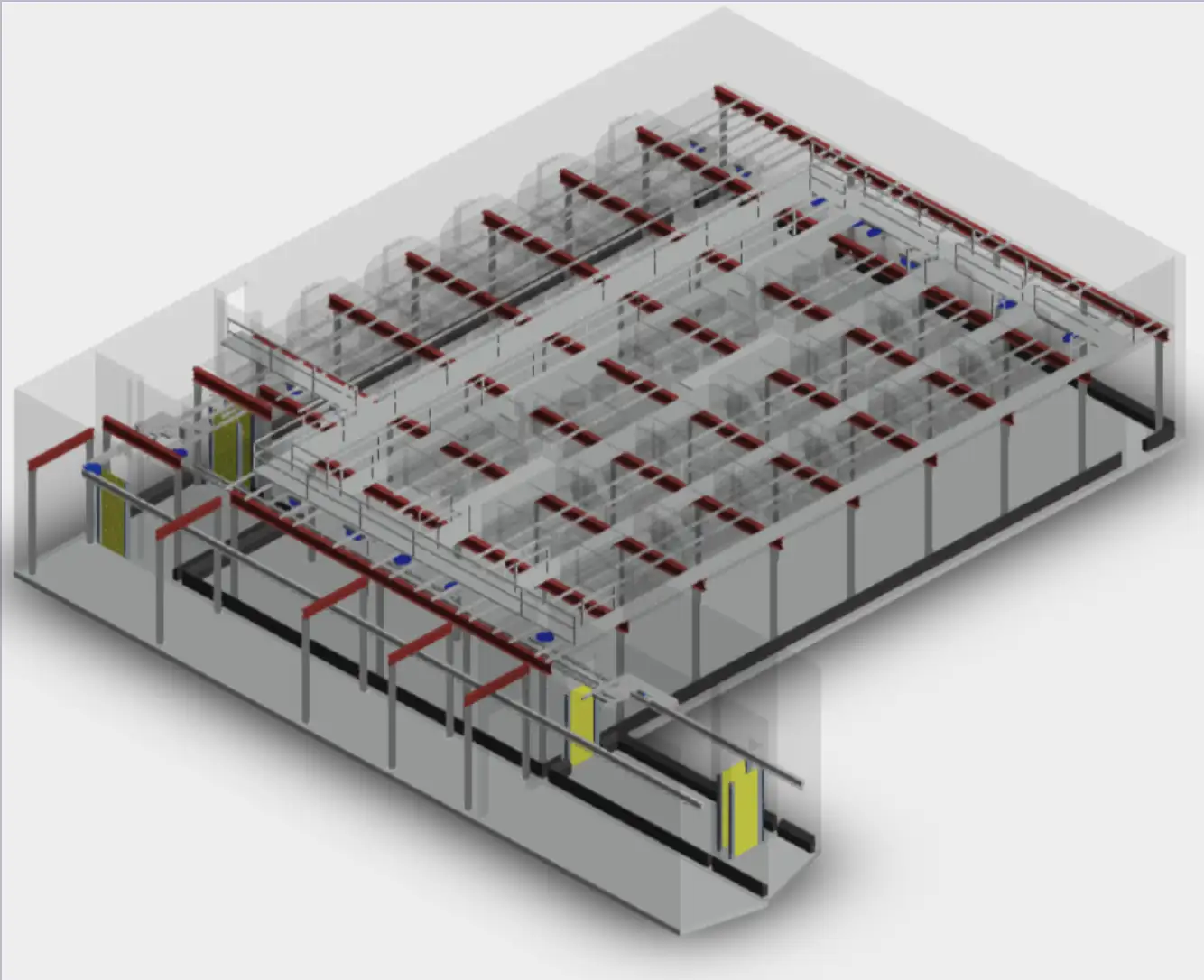
The same rigour applies to the interfaces. In a chilling installation, for example, the steel, the conveyor, the building works and the refrigeration all have to be coordinated — evaporator placement and conveyor layout dictate where columns and beams can go. Under Design & Build one party absorbs that coordination. Under competitive bidding it must be resolved in the documents, or it becomes the client's risk.
How a project moves from business plan to commissioning
Both routes share the same early stages. They diverge at the point where the design meets the market.
Concept development plan
The opening phase establishes estimated CAPEX and analyses the impact on OPEX, so the project's profitability is tested at the outset rather than discovered during construction.
Master plan
The business plan becomes an actionable master plan: layouts, flow diagrams, logistics, planning documentation, CAPEX and OPEX budgets, a SWOT analysis and a project timeline. Scope runs from reception through processing, chilling and freezing, cutting, deboning, packaging and dispatch, including effluent treatment and rendering.
Concept design
The design is developed to the level of detail needed to obtain comparable bids from qualified suppliers. This is the stage that determines whether a competitive tender will produce meaningful price comparison.
Tender design and documentation
The specification is written and issued. Under the competitive route this is the pivotal deliverable; under Design & Build much of it is absorbed into the contractor's own detailed planning.
Procurement and construction
Suppliers are appointed against the tendered scope and the plant is built, with interface coordination between building works, process, refrigeration, conveyors and secondary steel.
Start-up and commissioning
The plant is brought into operation and verified against the design basis — the point at which any ambiguity left in the earlier documentation becomes visible.
What a complete design project must contain
| Layout and specifications | The physical arrangement and the technical specification behind it |
|---|---|
| Products and processes | What is produced and by which process route |
| Flexibility demands | The product and volume changes the plant must absorb later |
| Services and utilities | Refrigeration, water, air, power and their distribution |
| Logistics and traceability | Internal flows and the traceability those flows must support |
| Hygiene and food safety | Zoning, cleaning and the hygienic design of the facility |
| Environmental aspects | Effluent, by-products and environmental compliance |
| Energy conservation | Energy demand and the measures that reduce it |
| Budget and economic analysis | CAPEX and OPEX, tested against the business case |
| Time schedule | Sequencing and the programme the trades are held to |
The two routes compared
Design & Build — single responsibility
Master Planning, Contracting, Detailed Planning, Implementation, Commissioning, Operation. One party owns the design and the interfaces between building, process, refrigeration and steel.
Consultancy & Competitive Bidding — transparency
Master Planning, Concept Design, Tender, Procurement, Construction, Startup & Commissioning. The design is independent of the builders, and suppliers compete on a defined scope.
Where the risk sits
Design & Build concentrates interface risk with the contractor. Competitive bidding leaves it with the client unless the tender documents resolve it explicitly.
Where the saving comes from
Competitive bidding delivers transparency and cost savings — but only when the documentation makes bids genuinely comparable across qualified suppliers.
Why the design decision is an economic one
12.5%
labour-cost reduction from a 1%-point yield gain
The scale on which plant design decisions compound over the life of a facility
10
areas a complete design project must cover
From layout and process to energy, economics and the time schedule
68+
years of engineering experience
A Danish food-technology engineering company founded in 1958
Project delivery routes — frequently asked questions
What is the difference between Design & Build and competitive tendering?
Design & Build runs Master Planning, Contracting, Detailed Planning, Implementation, Commissioning and Operation under a single point of responsibility. Consultancy & Competitive Bidding runs Master Planning, Concept Design, Tender, Procurement, Construction and Startup & Commissioning, with the design developed independently of the parties who will build it. The first concentrates interface risk with one contractor; the second offers transparency and cost savings.
Which route is cheaper?
Competitive bidding is chosen for transparency and cost savings, but the saving is only realised when the tender documentation is detailed enough that qualified suppliers price the same defined scope. Where the specification is ambiguous, price differences between bids usually reflect differences in what was included rather than genuine competitiveness.
When is the delivery route actually decided?
In practice it is decided at master-planning stage, because the master plan determines how far the design is developed before the project meets the market. Once concept design has been produced for one route, moving to the other means reworking the documentation.
What has to be in the design before going to tender?
A complete design project covers ten areas: layout and specifications; products and processes; flexibility demands; services and utilities; logistics and traceability; hygiene and food safety; environmental aspects; energy conservation; budget and economic analysis; and the time schedule. Concept design must reach the level of detail required to obtain comparable bids from qualified suppliers.
Why does interface coordination matter so much?
Because the trades physically constrain each other. In a chilling installation, evaporator placement and conveyor length, pitch and layout determine where columns and beams can sit, so steel, conveyor, building works and refrigeration must be coordinated as one problem. Under Design & Build the contractor absorbs that coordination; under competitive bidding it has to be resolved in the tender documents.