
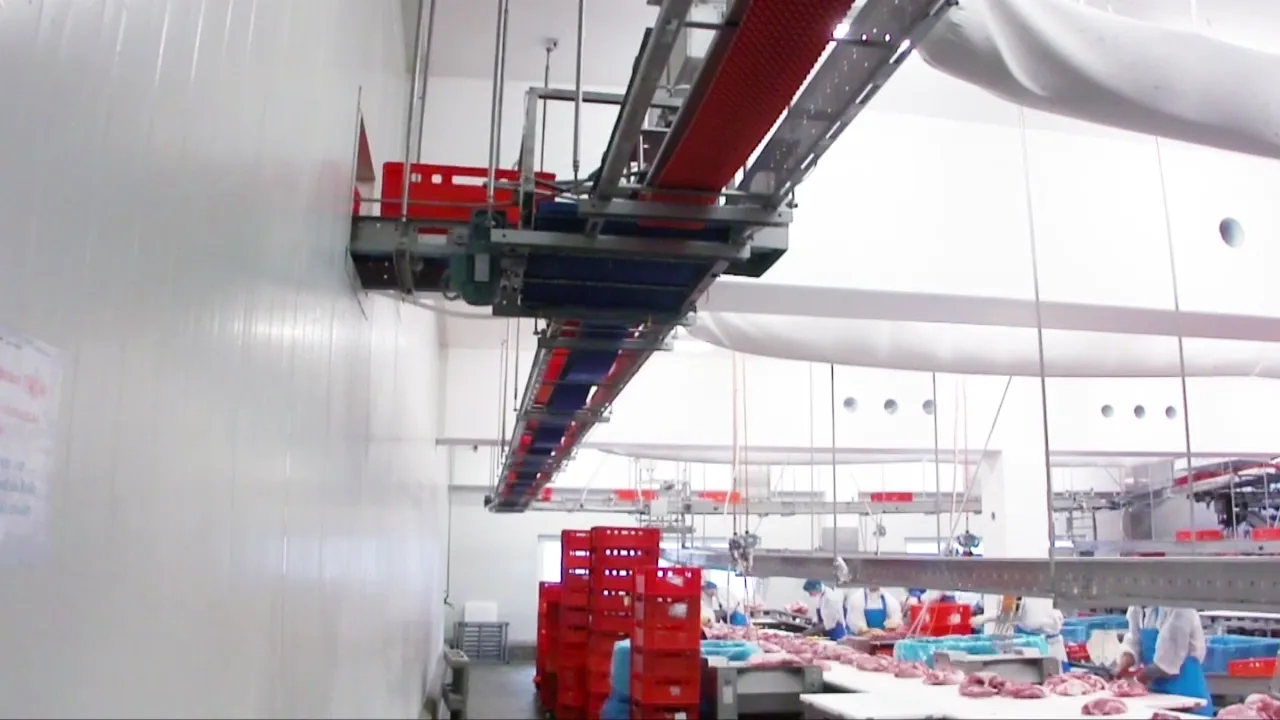
Slaughterhouse design
Hygienic blood collection in slaughterhouse design: what the blood can become
Hygienic blood collection is a bleeding system designed so that blood is captured under hygienic conditions at the sticking station, and it is what makes the blood eligible to become a human-consumption, pet-food, feed or technical blood product. That choice is settled when the bleeding system is designed, not in daily operation, and the station is placed against whichever blood collection- or disposal system the plant has.
What is hygienic blood collection in a slaughterhouse?
Hygienic blood collection is a bleeding system designed so that the blood drawn at sticking is captured under hygienic conditions, enabling production of human-consumption, pet-food, feed or technical blood products. Conventional blood collection is the alternative method listed beside it in the bleeding system's general design considerations; it is the hygienic system that makes those blood products possible.
Both methods occupy the same physical part of the plant — the sticking and bleeding section at the start of the unclean slaughter line, directly after the stunning system. What separates them is the specification: the knife, the hygiene stations, how the blood is removed and conditioned, and the bleeding-line floor and trough. Where the station sits is set alongside the stunning system, the unclean slaughter line, operator access, and the blood collection- or disposal system.
That is why it is a design question. The bleeding system is dimensioned and detailed once, on the drawing board, and the option not taken is expensive to retrofit into a running kill floor.
_Reviewed: September 2026_
Definition
- Hygienic blood collection
A bleeding-system design in which blood is collected under hygienic conditions at the sticking station, enabling production of human-consumption, pet-food, feed or technical blood products.
Why the collection decision is a commercial decision
The capital cost is largely the same either way. Whether or not critical details on the live animal handling side are executed with care and precision, the capital expenditure remains largely unchanged. What changes is the return: neglecting these details leads to a substantial reduction in product value, and negatively affects the efficiency of downstream slaughtering operations. The bleeding station carries several of those details: knife sterilization and hygiene, blood removal, the bleeding-line floor and trough.
Two separate choices, both settled in the design. The method — conventional or hygienic blood collection — is one of the bleeding system's general design considerations, alongside horizontal or vertical sticking. The system the station is placed against — a blood collection system or a blood disposal system — belongs to its placement, with the stunning system, the unclean slaughter line and operator access. Neither is an accessory added after the line is built.
Welfare and compliance sit inside the same design. The bleeding system must respect the maximum allowed stun-to-stick time, and bleeding and observation time must be sufficient to ensure certain death — supported, where required, by a monitoring system. INTERCOOL's designs are compliant with EC 1099/2009, can be adapted to frameworks such as USDA and FDA or local regulations, and are developed in cooperation with local veterinary authorities. Handling upstream also shapes meat quality, which is why the bleeding system is designed as the last link of the live animal handling chain, not an isolated station.
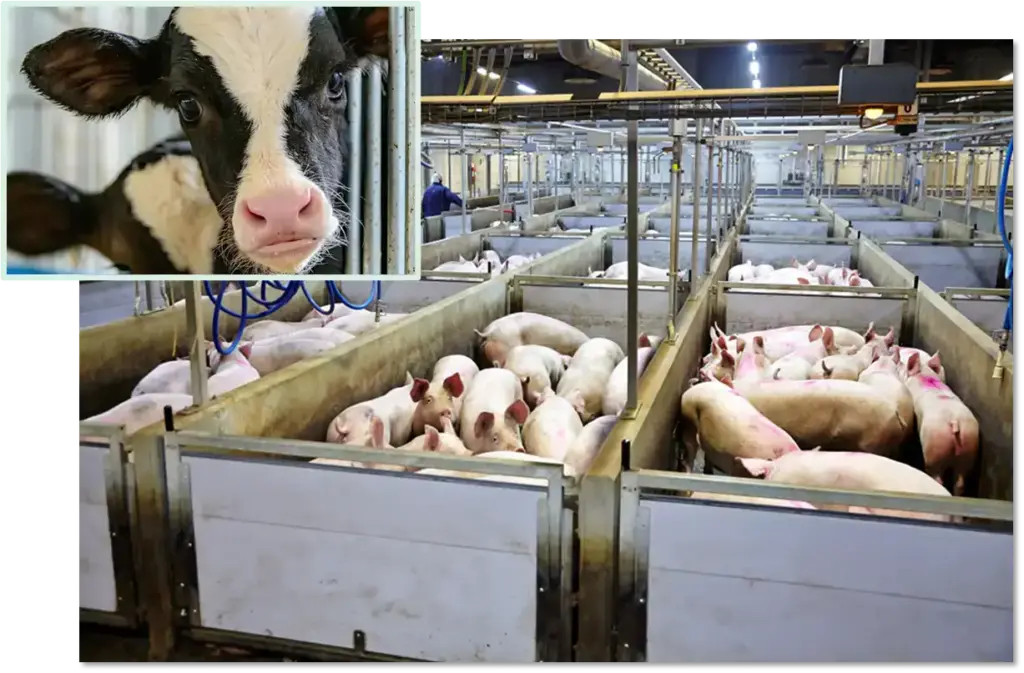
How the bleeding system is designed
Each stage narrows the choices open to the next, which is why the collection method is settled early.
Dimension the system
The bleeding system is dimensioned in accordance with the allowed stun-to-stick time — itself set by the choice of stunning principle — the production capacity, the required number of operators, the stunning procedure and its fluctuation, and the unclean slaughter line it belongs to.
Place it in the flow
Placement follows the stunning system and the unclean slaughter line, operator access, and the blood collection- or disposal system. That system is part of the placement question, not an accessory added later.
Settle the general design choices
Four decisions are taken together: the allowed stun-to-stick time, the number of animals per stunning discharge, horizontal or vertical sticking, and conventional or hygienic blood collection.
Detail the workstations
Conveyor designs, the shackling work-station and the sticking work-station — both giving their operators ergonomic and efficient work stations.
Detail the hygiene and the blood route
Knife sterilization, hygiene and apron wash; a conventional or hollow sticking knife; blood removal and anti-coagulant; the bleeding-line floor and blood trough. This group is where hygienic collection is won or lost.
Close the loop on monitoring and traceability
Bleeding monitoring and alarm functionality, and traceability of unmarked batches.
Bleeding-system design variables
| Allowed stun-to-stick time | Set according to the choice of stunning principle |
|---|---|
| Dimensioning inputs | Production capacity; required number of operators; stunning procedure and fluctuation; unclean slaughter line |
| Placement | Stunning system and unclean slaughter line; operator access; blood collection- or disposal system |
| Blood collection method | Conventional or hygienic blood collection; a hygienic system enables human-consumption, pet-food, feed or technical blood products |
| Bleeding and observation time | Sufficient to ensure certain death; may include a monitoring system |
| Compliance | EC 1099/2009, adaptable to USDA, FDA or local regulations |
Where the blood goes next
Whichever system the bleeding station is placed against, the receiving infrastructure has to be sized for it. By-product streams are a named scope item in a slaughterhouse master plan, so the blood route belongs there rather than in a late equipment selection.
With a hygienic blood collection system, the blood leaves as raw material for human-consumption, pet-food, feed or technical blood products, with its own handling and storage requirements. A blood disposal system is the other system the station can be placed against. Either way, processing animal by-products is a separate department with its own design logic, covered in our page on poultry rendering plant design.
The zoning boundary is a given: the bleeding station sits on the unclean side, and anything crossing to the clean side does so under the plant's hygienic zoning rules.
Frequently asked questions
What is hygienic blood collection in a slaughterhouse?
Hygienic blood collection is a bleeding system designed so that blood drawn at sticking is captured under hygienic conditions, enabling production of human-consumption, pet-food, feed or technical blood products. Conventional or hygienic blood collection is one of the bleeding system's general design considerations, settled when the system is designed.
What decides whether the blood can become a blood product?
The design of the bleeding system. Conventional or hygienic blood collection is one of its general design considerations, taken together with the allowed stun-to-stick time and horizontal or vertical sticking; a hygienic collection system is what enables human-consumption, pet-food, feed or technical blood products. The blood collection- or disposal system is separately part of the system's placement.
Does hygienic collection conflict with animal welfare requirements?
No. The same design must respect the maximum allowed stun-to-stick time, and bleeding and observation time must be sufficient to ensure certain death, optionally supported by a monitoring system. INTERCOOL's designs are compliant with EC 1099/2009 and adaptable to USDA, FDA or local regulations.